Why you shouldn't flush a dead fish, and what to do instead
A single flushed fish won't break a treatment plant, but it's still a poor goodbye: it can carry parasites and bacteria into sewers that don't always get full treatment, it adds solids to septic tanks, and many children find it upsetting. Freezing, burial or a low-cost communal cremation are simple alternatives.
By the Fish Cremation & Memorial Services editorial team · Updated September 24, 2026 · 5 min read · Sources
- Where a flushed fish actually ends up
- The honest risks, without scare stories
- Kinder options that cost little or nothing
The honest answer
Is flushing a dead fish really that bad?
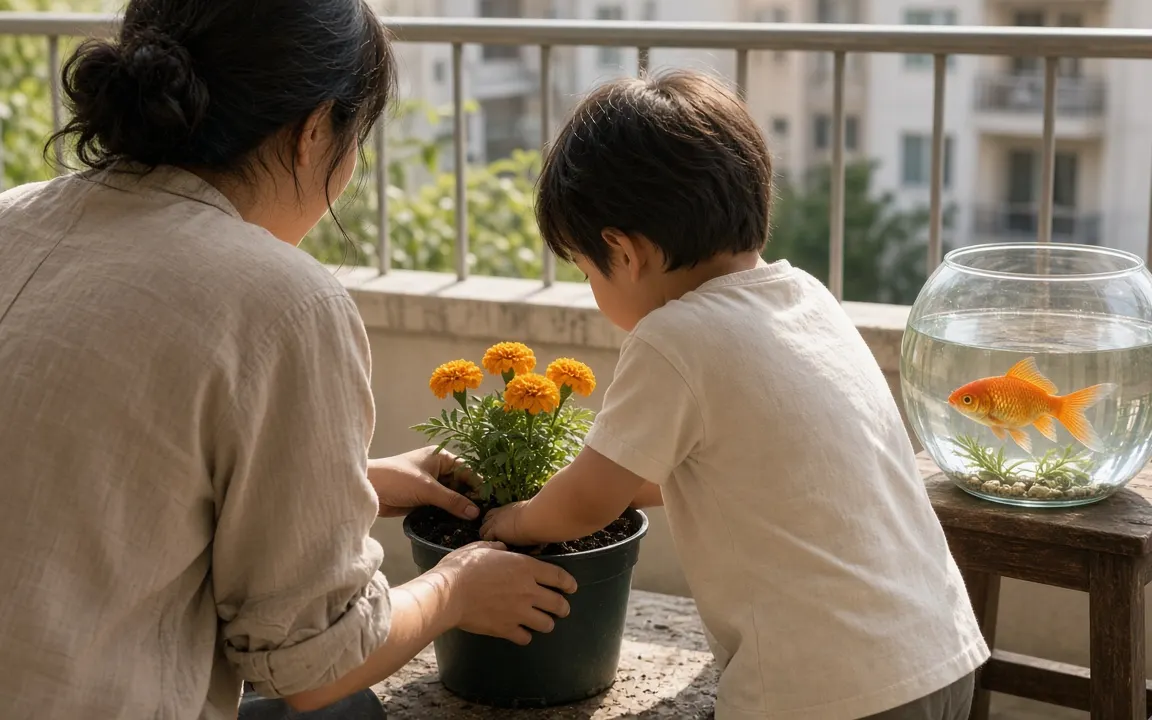
It's not a disaster, but it's not the harmless shortcut it looks like either. The fish doesn't vanish; it travels through pipes that sometimes spill into rivers, it can carry organisms that don't belong in local waters, and in a home with a septic tank it adds solids that don't break down quickly. Just as often, the real cost is emotional, especially for a child watching.
We want to be fair about this. The science on one small dead fish is thin, and most of the loudest warnings online are about live fish being released, which is a much bigger problem. So this piece separates what's well established from what's a reasonable precaution, and then covers the easy alternatives.
Before reading about it, what did you think happens to a flushed fish?
Tap an answer to vote and see how others answered. Anonymous.
Down the pipe
Where does a flushed fish actually go?
On a city sewer, the fish rides the wastewater to a treatment plant. The first stage there is usually a set of screens that catch large solids, which are hauled to a landfill. So a flushed goldfish often ends up in the trash anyway, just after a long, undignified trip.
The exception matters. Many older US cities have combined sewers, which carry rainwater and household waste in the same pipes. During heavy storms these can overflow by design, releasing untreated water into rivers and harbors. Whatever went down your toilet on a stormy evening may reach open water without treatment.
What the fish may carry
Can a flushed fish spread disease to wild fish?
It's possible, though hard to measure. Pet fish are part of an enormous global trade: a peer-reviewed analysis of US wildlife imports found that between 2000 and 2013 the US imported 11 billion specimens[1] of wildlife, and tropical fish made up about a quarter of them. Fish from farms and markets around the world can carry parasites, bacteria and viruses that local wild fish have never encountered.
Most organisms from a dead fish probably won't survive full sewage treatment, and a single body is a small dose. The risk rises when the water skips treatment, as in a sewer overflow, or when someone drops a fish straight into a creek or lake. That's why fisheries agencies ask people not to put aquarium animals, plants or water into the wild in any form; the Habitattitude campaign, backed by the US Fish and Wildlife Service and NOAA, is the best-known example.
The bigger problem
Why is flushing or releasing a live fish worse?
Some people flush a sick fish thinking it's a quick end. It isn't: a fish may survive the pipes for some time, cold and stressed, which is a cruel way to go. If a fish is suffering and won't recover, ask an aquatic vet or an experienced fish store about a humane method.
Releasing a healthy fish is a different harm. Goldfish are the classic example. In a bowl they typically live 6-7 years[2], but in open water they can grow close to 2 feet and 6 pounds, stirring up sediment, clouding lakes and competing with native species. Releasing them into Minnesota waters is illegal, and the state natural resources agency's advice for unwanted goldfish is simple: never release[3] them. Instead, return them to a retailer, rehome them with a hobbyist or ask a vet.
The part people forget
Why does flushing feel wrong to so many families?
Because the container says something about the animal. In one US survey, 64% of owners rated a trash bag as an unacceptable place for a pet's body [4]. A toilet sends a similar message, and children pick it up quickly: the fish they fed every morning is suddenly treated like waste. Most families already choose something gentler for other pets: by our estimate from UK and US surveys, about two in three bereaved owners choose cremation and about 30% burial[5].
For many kids, a goldfish or betta is the first death they understand, and how the adults handle it becomes the template. Parents feel the weight of that; in a large UK survey, 93.4%[6] of parents said they wanted better guidance on helping children through pet loss. A ten-minute burial or a drawing tucked into a box gives a child something to do with their feelings. Our short aquarium goodbye rituals are simple enough for a school night.
Was a fish your child's first pet?
Tap an answer to vote and see how others answered. Anonymous.
Better options
What should you do with a dead fish instead of flushing it?
Start with the freezer. Seal the fish in a bag inside a small tub and freeze it; that takes the pressure off, and you can decide over the next few days or weeks. Then pick the goodbye that fits the fish and your household.
| Option | Typical cost | Good for |
|---|---|---|
| Freeze now, decide later | Nothing | Any fish, any household |
| Garden burial, dug deep, away from water | Nothing | Small and medium fish, homeowners |
| Large planter with a new plant | A pot and potting mix | Renters and apartment dwellers |
| Communal cremation | From about $50 [7] | Any size, no ashes returned |
| Private cremation with ashes back | From about $100 [7] | Koi and large pond goldfish |
Ashes are proportional to size, typically about 3-5% of body weight[8], so private cremation mostly makes sense for bigger fish. Our explainer on what a tiny fish really leaves after cremation is honest about that. Some vets and aquatic stores will also take a fish for communal cremation; it's worth a phone call. The comparison tool lines everything up by cost and effort, and our services page explains each route in more depth.

Free tool
Aftercare options compared
Compare private, communal and water cremation with burial on cost, timing and what comes home.
If it's already done
What if you've already flushed your fish?
Please don't carry guilt over it. Generations of families flushed goldfish because no one suggested anything else, and one fish is very unlikely to have caused lasting harm. What you can do now is give the goodbye a proper shape.
A memorial doesn't need a body. Plant a water lily or a pot of forget-me-nots, paint a stone with your fish's name, or frame a photo from the tank. Our memorial ideas for fish keepers has plenty more, and grieving a pet fish covers the feelings that can surprise you. If another fish in the tank is ailing and you'd like options ready, send us a note and we'll email what's available locally.

Reader polls
What would you choose?
Vote anonymously and see how other readers answered. The results are live counts from people who visit this site, so they show real opinions, not a scientific sample.
Before reading about it, what did you think happens to a flushed fish?
Tap an answer to vote and see how others answered. Anonymous.
If you had to decide today, which aftercare would you choose for your pet?
Tap an answer to vote and see how others answered. Anonymous.


Questions people ask
Does a flushed fish go to the ocean?
Rarely directly. On most city systems the fish goes to a treatment plant, where screens pull out large solids for landfill. The exception is a combined sewer during heavy rain, when overflows can carry untreated water into rivers, lakes or coastal waters. On a septic system, the fish stays in your tank.
Can a flushed fish survive and come back to life?
A dead fish can't. A live, weak fish flushed in the hope it will die quickly may survive for a while in the pipes, which is why vets consider flushing an inhumane way to end a fish's life. Stories of goldfish thriving in sewers are mostly myth, since treatment chemicals and low oxygen are hard on fish.
Is it illegal to flush a dead fish?
Generally, no. We're not aware of any US law that specifically bans flushing a dead pet fish, though some sewer authorities ask residents not to flush anything but toilet paper. Releasing live fish into public waters is a different matter and is illegal in many states, including Minnesota for goldfish.
Will a dead fish clog my toilet?
A very small fish usually passes through. A larger goldfish, a pleco or anything with spines can lodge in the trap or the drain line, and on a septic system bones and scales add to the sludge layer. If the fish is longer than your finger, it's safer to choose another option.
What do pet stores do with dead fish?
Practices vary. Some stores bag and freeze dead stock for disposal with their commercial waste, and a few have arrangements with a vet or a crematory. If you ask politely, some will take a customer's small fish or advise you on local options, especially if you bought it there. Call first rather than turning up with a body.


Sources and our estimates
- [1] From 2000-2013 the U.S. imported about 11 billion wildlife specimens; tropical fish were 25% of specimens and one-third of shipments contained live animals, mostly for the aquatic and pet industries. Smith KM et al. Summarizing US Wildlife Trade with an Eye Toward Assessing the Risk of Infectious Disease Introduction. EcoHealth, 2017 (PMID 28176029), 2017.
- [2] Goldfish typically live 6-7 years, usually grow 5-8 inches but can approach 2 feet and 6 pounds; releasing them into Minnesota waters is illegal. Minnesota DNR - Goldfish (Carassius auratus) invasive species page.
- [3] Minnesota DNR advises owners of unwanted goldfish to return them to a retailer, use a surrender event, rehome with hobbyists, or ask a veterinarian or pet retailer about humane disposal, never releasing them. Minnesota DNR - Goldfish (Carassius auratus) invasive species page.
- [4] 64% of US owners rated a trash bag as an unacceptable container for a deceased pet; 66.1% rated a blanket/shroud acceptable. Cooney, Kogan, Brooks, Ellis - Pet Owners' Expectations for Pet End-of-Life Support and After-Death Body Care, Topics in Companion Animal Medicine (2020), 2020.
- [5] UK and US survey evidence converges on roughly two-thirds of bereaved owners choosing cremation (UK 67%; US 68% ever) and about 29-32% choosing burial. Our estimate: mean(67, 68) = 67.5; burial range 29% (UK) to 32% (US). How we calculate.
- [6] 93.4% of parents in the RSPCA survey wanted better guidance on helping children through pet loss. RSPCA — Pet Loss Survey Results, 2026.
- [7] PetMD says US group (communal) cremation costs from about $50 and private cremation from about $100. PetMD - Pet Euthanasia: How Much Does It Cost? (July 2025), 2025.
- [8] Embrace notes cremated remains typically weigh about 3-5% of the pet's original body weight. Embrace Pet Insurance - Bury or Cremate Your Dog? Costs, Pros & Cons, 2025.
Find a kinder goodbye for your fish
Tell us what you need and where you are. We'll reply by email with clear options and prices so you can decide in your own time.