How to bury a pet fish so the grave stays peaceful
Dig at least a foot deep for a small fish and two to three feet for a koi, choose a spot well away from the pond, wells and vegetable beds, and wrap the body in paper or cotton rather than plastic. If the ground is frozen, keep your fish in the freezer until the thaw.
By the Fish Cremation & Memorial Services editorial team · Updated September 24, 2026 · 5 min read · Sources
- Depths that keep raccoons and foxes away
- Where to dig, and where never to
- Winter and apartment options that work
The short version
What's the right way to bury a pet fish?
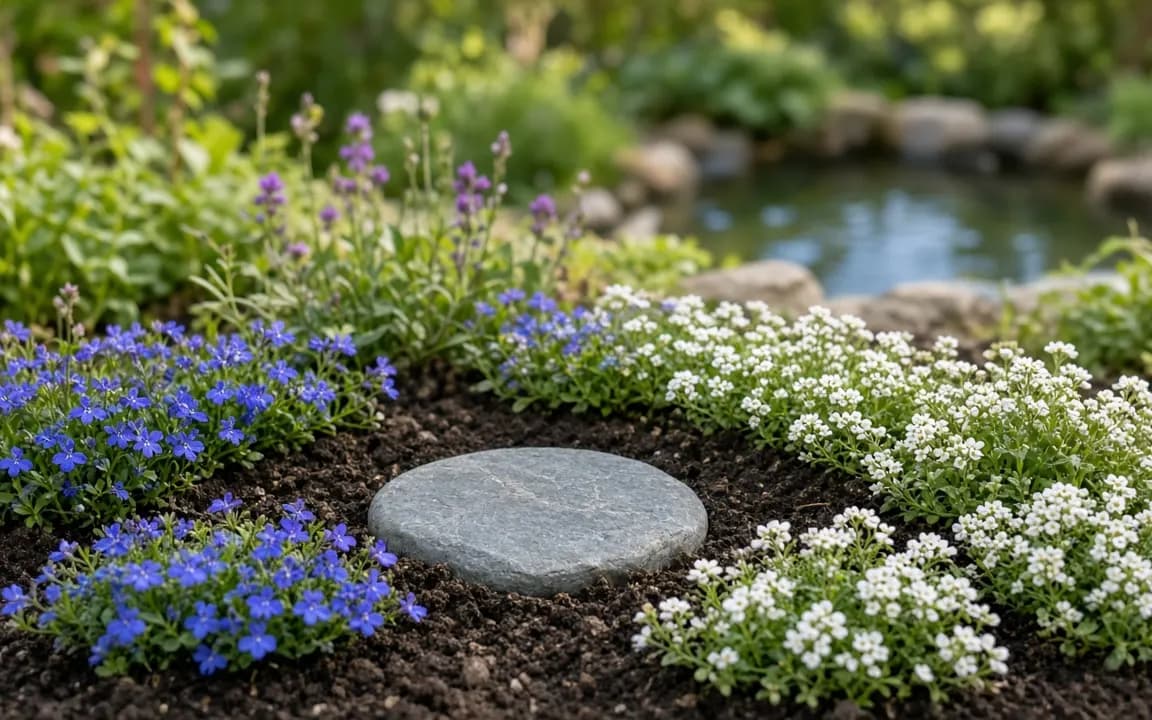
Choose a spot at least several yards from your pond and any well, dig deeper than feels necessary, wrap the fish in something that rots, backfill firmly and cover the surface with a flat stone for the first months. That's the whole method. The details below are about getting each step right for the size of your fish and the season.
Home burial is one of the most common goodbyes for small pets. A US survey asking owners about their preferred future aftercare found 34.9% chose home burial [1], second only to flame cremation. For fish it's especially popular because tiny bodies leave so little ash that cremation can feel like paying for nothing to come back.
What would you choose for a fish you loved?
Tap an answer to vote and see how others answered. Anonymous.
Digging
How deep should you bury a fish?
Fish have a strong scent even when frozen, and raccoons, foxes, skunks, opossums and dogs are all willing diggers. A shallow scrape under the roses rarely lasts the night. Use these as minimum depths of soil above the body:
| Fish | Soil above the body | Tip |
|---|---|---|
| Betta, tetra, guppy, small goldfish | At least 12 inches | A trowel or bulb planter is enough |
| Large goldfish, oscar, pleco | 18 to 24 inches | A narrow spade keeps the hole tidy |
| Koi or big pond goldfish | 2 to 3 feet | Two people make lifting easier |
Other countries put numbers on this. Germany requires at least 50 cm of soil over a buried pet [2], roughly 20 inches, and England's rules for burying animals set no minimum for small pets and reserve the 1 m soil and water-table rules for larger animals [3]. Most US towns don't specify, and a small fish doesn't need a grave built to rules written for much larger animals, but those figures point the same way: when in doubt, go deeper.
Choosing the spot
Where should you bury a fish, and where not?
- Away from the pond. Rain washes through soil, and you don't want what a decaying fish releases seeping back into water your other fish live in. A few yards downhill of the pond, not uphill, is safer.
- Away from wells and springs. Pet cemeteries in England must sit at least 250 m from drinking-water wells [4]; a garden grave can't match that, but it shows how seriously groundwater is taken. Keep as far from a private well as your yard allows.
- Out of vegetable beds and anywhere you'll dig again, such as a future patio or fence line.
- Clear of utility lines. In the US, calling 811 a few working days before you dig gets buried cables and pipes marked for free.
Good spots are usually quiet and visible: under a shrub you can see from the kitchen, beside a bench near the pond, or in a border you already love. If you're weighing a garden grave against cremation, our guide to fish aftercare services sets the options out plainly.
Preparing your fish
What should you wrap a fish in before burial?
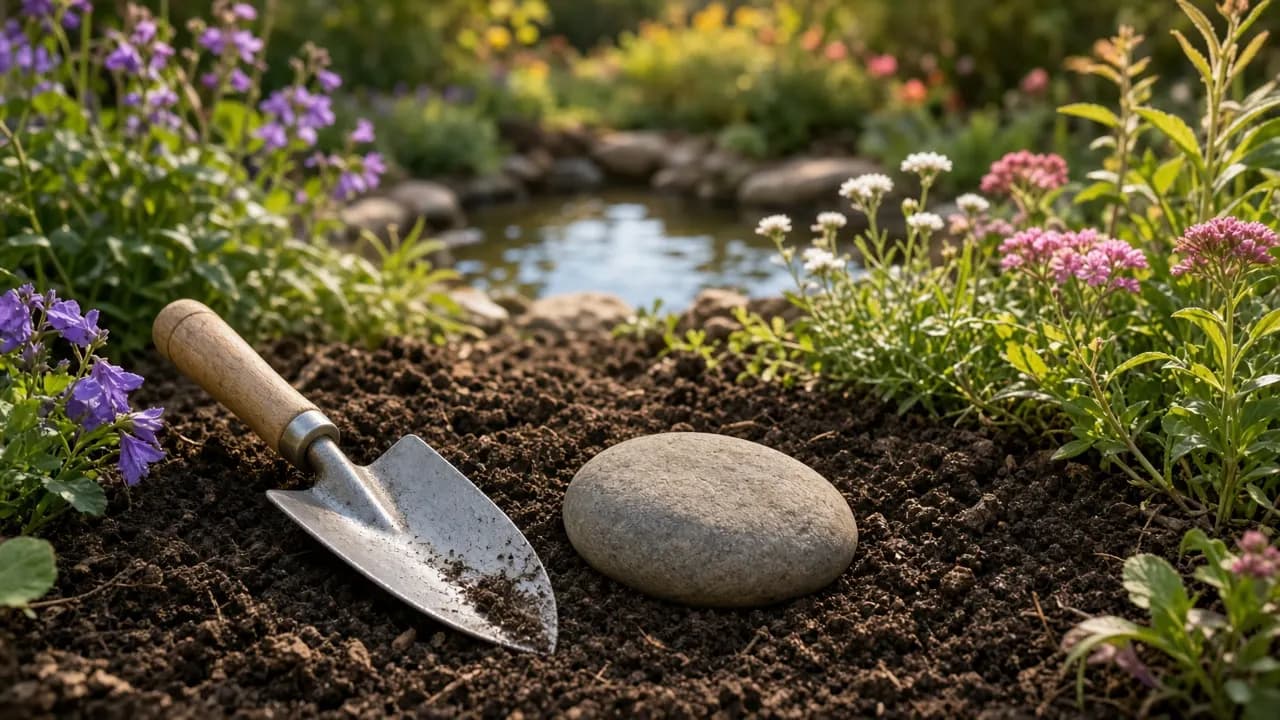
Anything natural. A few sheets of plain paper towel, an old cotton handkerchief, a paper lunch bag or a small cardboard box all break down in the soil. For a koi, a cotton bath towel or a length of burlap, perhaps inside a simple wooden crate, keeps things dignified while you carry it. Skip plastic bags and tubs: they preserve rather than return, and they may resurface years later.
Families often add something small: a leaf from the pond's water lily, a favorite ornament from the tank, a child's drawing or a note. Choose items that are natural or that you're happy to leave in the ground for good. If you'd rather keep an ornament, set it aside for a memorial shelf instead.
Cold weather
What if the ground is frozen solid?
Wait. Keep your fish sealed in the freezer until spring, when the soil softens. That can feel strange, but it's gentle and practical, and a frozen fish keeps perfectly for months. Trying to chip a shallow grave through frozen topsoil almost always leaves the body too close to the surface.
Pond keepers in cold climates sometimes dig a spare hole in the fall, fill it with loose leaves and cover it with a board, so it's ready if a koi dies over winter. If freezer space is the problem, a communal or private cremation is a reasonable alternative; our notes on moving a large pond fish cover getting it there.
No yard?
Can you bury a fish in a planter if you rent?
For a small fish, yes. Use a pot at least 14 inches deep so there's a good 10 inches of potting mix above the body (a pot on a balcony is out of reach of most diggers), and choose an ornamental plant rather than herbs or salad greens. A dwarf shrub, a lavender or a hardy fern all do well on balconies. Place the fish near the bottom and water normally; soil microbes do the rest.
A planter travels with you when you move, which is a real advantage over a garden grave. It isn't practical for a koi, though. For big fish, many renters choose cremation and later bury or keep the ashes; the aftercare comparison tool shows the trade-offs quickly.

Free tool
Aftercare options compared
Compare private, communal and water cremation with burial on cost, timing and what comes home.
Think twice
When is home burial not a good idea for a fish?
Also think twice if your fish was euthanized by a vet with injectable drugs, since residues can harm scavengers that dig; ask the vet what they advise. And if you're likely to move within a few years, remember a garden grave stays with the house. Ashes, by contrast, can come with you. For a big koi they can amount to a real quantity: remains typically weigh about 3-5% of body weight[5].
Other places to bury
How much does a pet cemetery charge for a fish?
Not every pet cemetery takes fish, so ask first. Those that do usually price by size, and a fish lands in the smallest tier. Across five posted US price lists, we estimate a small pet's whole-body burial, including plot and digging, at around $350[6]. Embrace Pet Insurance puts burial for pets under 30 lb at $400 to $600 [7], while a review of 15 US cemeteries found $1,500–$2,000[8] typical once markers and care fees are included.
If you cremate first, many cemeteries sell smaller plots for ashes, and you can bury ashes at home without the depth worries. Mix them well with soil first; our bio memorials guide explains why. For what's typical in your area, see our local pages or send us your details.
Remembering the spot
What makes a simple marker for a fish's grave?
Keep the heavy flat stone from the first months, or swap it for something personal once the soil settles. A smooth river pebble painted with a koi's colors costs nothing, and small engraved natural-stone memorials run $38–$115[9]. A clump of blue iris or a dwarf water iris planted beside the pond, rather than on the grave itself, links the two places. More ideas are in our guides to pond-side markers and fish memorials.

Reader polls
What would you choose?
Vote anonymously and see how other readers answered. The results are live counts from people who visit this site, so they show real opinions, not a scientific sample.
What would you choose for a fish you loved?
Tap an answer to vote and see how others answered. Anonymous.
Where are (or will be) your pet's ashes?
Tap an answer to vote and see how others answered. Anonymous.
If you had to decide today, which aftercare would you choose for your pet?
Tap an answer to vote and see how others answered. Anonymous.

Questions people ask
Can I bury my fish in the pond or in its tank gravel?
Please don't. A body buried in pond margins, plant baskets or aquarium gravel keeps decaying in or next to the water, which pushes up ammonia and can spread whatever made the fish ill. Your remaining fish would live with the consequences. A grave on dry land a few yards away is far kinder to them.
How long does a buried fish take to decompose?
A small fish in moist, warm soil usually breaks down within a few weeks to a couple of months, since fish bodies are mostly water and have fine bones. A koi takes longer, often several months, and larger bones and scales can last a year or more. Cold, dry or heavy clay soil slows everything down.
Do I need permission to bury a fish in my yard?
Usually not on land you own, though there's no single US rule. Some towns restrict any animal burial, and homeowners' associations and leases can forbid it. If you rent, ask your landlord first. A quick look at your city or county code online settles it for your address.
Will a buried fish attract animals?
It can if the grave is shallow. Raccoons, foxes, skunks and dogs follow the smell of fish readily. Digging to the depths above, backfilling firmly and laying a paving stone or heavy slab on top for a few months prevents almost all disturbance. Wrapping the fish in paper rather than leaving it bare also reduces the scent.
Can I dig up my fish's grave if we move house?
It's possible but rarely pleasant, and after a few months there may be little left to recover. If a move is likely, many families choose cremation or planter burial instead, so the memorial can come with them. Another option is to leave the grave and take the marker stone to the new garden.
Is it safe to plant vegetables over a fish grave later?
It's better to keep food crops elsewhere, especially if you don't know why the fish died. The risk from one small fish is low, but ornamental plants, shrubs or wildflowers avoid the question entirely. Many families plant something that flowers around the time the fish died, which makes a quiet yearly reminder.


Sources and our estimates
- [1] Asked their preferred future after-death care, 40.4% of US owners chose traditional flame cremation and 34.9% home burial; 10.7% chose cemetery burial and 1.9% alkaline hydrolysis (aquamation). Cooney, Kogan, Brooks, Ellis - Pet Owners' Expectations for Pet End-of-Life Support and After-Death Body Care, Topics in Companion Animal Medicine (2020), 2020.
- [2] German home burial of pets requires at least 50 cm of soil cover and is not permitted in water- or nature-protection areas. deine-tierwelt.de - Tierbestattung: Diese Moeglichkeiten gibt es und das kosten sie (Nov 2023), 2023.
- [3] England's groundwater guidance asks for at least 1 m of clearance between the bottom of the burial hole and the water table, and at least 1 m of soil over the carcass, for larger animals and other animal burials; it sets no minimum requirements for small pets such as a dog or cat buried on your own land. GOV.UK (Environment Agency) - Animal burials: prevent groundwater pollution, 2024.
- [4] In England, pet cemeteries must register with APHA (form AB 117) and bury animals at least 0.5 m deep, at least 250 m from drinking-water wells or springs. GOV.UK - Pet cemeteries: where you can build them and how to register, 2025.
- [5] Embrace notes cremated remains typically weigh about 3-5% of the pet's original body weight. Embrace Pet Insurance - Bury or Cremate Your Dog? Costs, Pros & Cons, 2025.
- [6] Across five posted US pet-cemetery price lists, the median whole-body burial for a small pet, including plot and opening/closing, was about $350. Our estimate: median of [Rainier $150 plot incl. first burial, Cedar Bend $290, Forest $350, Great River $750, Precious Memories $1,500]. How we calculate.
- [7] Embrace lists US pet cemetery burial at $400-$600 for pets under 30 lb up to $800-$1,500+ for pets over 100 lb. Embrace Pet Insurance - Bury or Cremate Your Dog? Costs, Pros & Cons, 2025.
- [8] Furever Memorials' review of 15 US pet cemeteries puts the typical pet burial at $1,500–$2,000. Furever Memorials – Pet Burial Cost (15 cemeteries), 2025.
- [9] Adirondack Stone Works sells engraved natural-stone pet memorials from $38 (6–7 inch mini) to $115 (13–14 inch large), with 1–4 lines of text included. Adirondack Stone Works Pet Memorials, 2026.
Compare fish burial and cremation near you
Tell us what you need and where you are. We'll reply by email with clear options and prices so you can decide in your own time.