Getting your fish, even a 15 lb koi, from pond to provider
Lift your fish out with a net or koi sock, wrap it in a towel, seal it in two bags, then freeze it or pack it in a cooler with ice until you can drive it to the crematory or your vet. A large koi takes two people and a plan, but nothing about it is difficult once you know the steps.
By the Fish Cremation & Memorial Services editorial team · Updated September 24, 2026 · 6 min read · Sources
- Netting a heavy koi without slipping in
- Freezer, fridge or cooler, and for how long
- Getting ashes home, including by mail
The short answer
How do you get a fish to a crematory or vet?
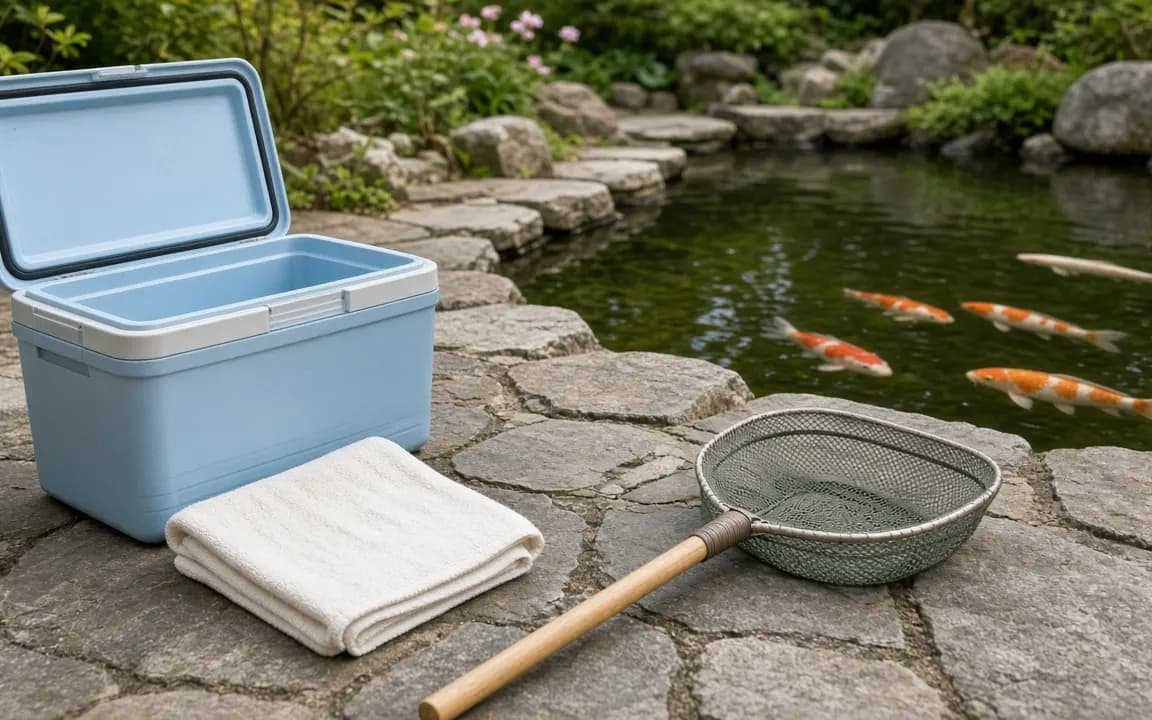
In five steps: net it, wrap it, bag it, keep it cold, and drive it there or hand it to someone who collects. A small aquarium fish fits in a sandwich bag and a lunchbox cooler. A mature koi may weigh 10 to 15 lb and needs a bigger cooler, two pairs of hands and a little forethought.
- Unplug pumps, heaters and UV lights before you reach into the water.
- Lift the fish out with a net, koi sock or pan.
- Wrap it in an old towel or paper, then seal it in two plastic bags.
- Freeze it, or pack it in a cooler with ice if you'll hand it over within a day or two.
- Call ahead, then drive it to the provider or your vet, or book a collection.
The hardest part
How do you lift a large koi out of a pond safely?
A big koi is heavy, slippery and awkward, and a pond edge is a bad place to lose your footing. Turn off anything electrical in the water first; wet hands and pond equipment don't mix. Then guide the fish toward a shallow shelf or the edge with a wide pond net rather than chasing it around the pond.
- Use a koi sock or pan if you have one. A fabric sock or a shallow floating bowl supports the whole body, so it doesn't fold in the net.
- Work in pairs. One person steadies the net while the other slides a towel underneath and lifts with two hands.
- Lower the water if needed. In a deep pond, dropping the level a few inches makes the job easier and safer.
- Wear gloves. Pond water can carry bacteria, as the CDC's advice for fish owners explains, and a fish that died of illness should be handled with a barrier.
Keep the rest of the pond in mind. A fish that has been dead for a while releases ammonia, so test the water afterward, and if others look unwell, call an aquatic vet. Our sudden koi death checklist lists what to test. If the cause is unclear, don't let a heron or raccoon get at the body while you fetch bags.
Keeping things clean
How should you wrap and bag a fish for transport?
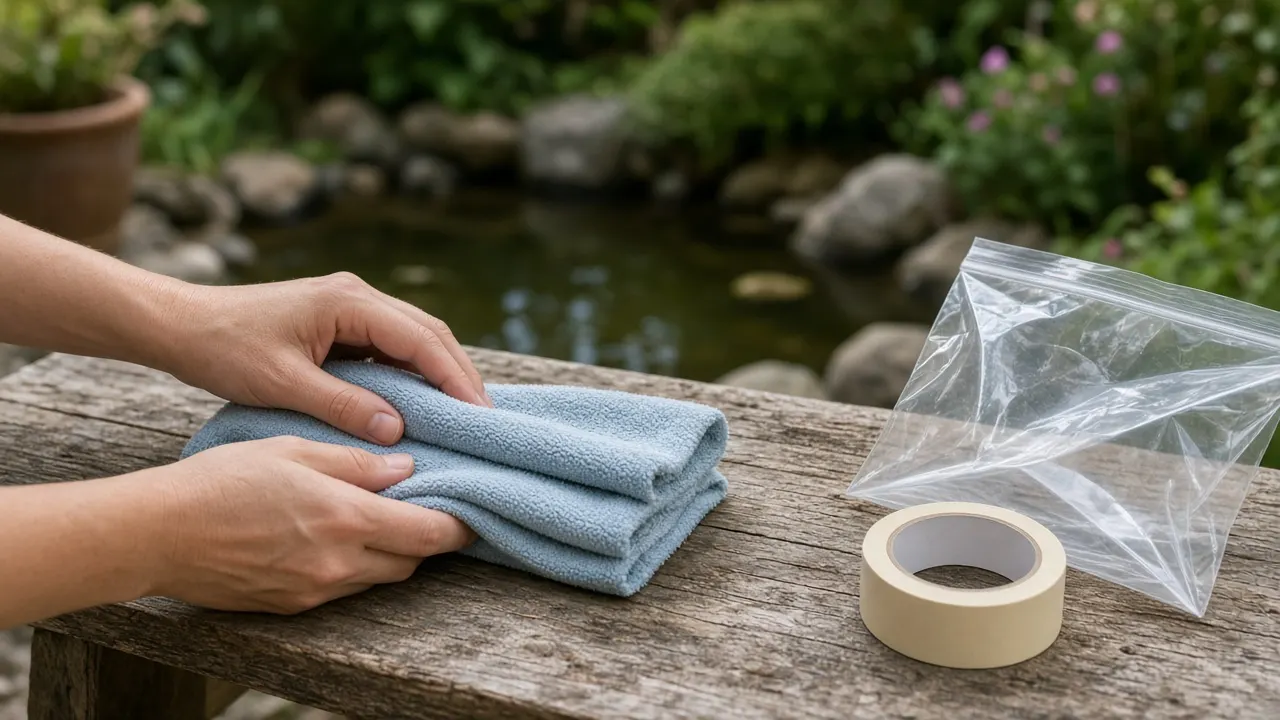
Wrap first, then bag. An old towel or a few sheets of newspaper absorb moisture and make a large fish easier to handle, and a cotton cloth looks gentler if the provider unwraps it in front of you. Then seal it in a heavy-duty plastic bag and a second bag over that, pressing the air out.
For a small aquarium fish, a damp paper towel inside a zip bag, placed in a small plastic tub, keeps it from being crushed in the freezer. Label the outer bag with your fish's name, your name and your phone number in marker, so nothing gets mixed up at the vet or crematory.
Freezer or ice
Should you freeze or chill your fish, and for how long?
If handover will take more than a day or two, freeze. A frozen fish can wait weeks while you choose a provider, and most crematories accept frozen bodies. If you want a vet to examine the fish for the cause of death, chill it in the fridge or on ice instead, because freezing damages the tissue they need, and get it to them within a day.
A large koi may not fit a kitchen freezer. Lay it flat rather than bending it, and if there's no room, ask a neighbor with a chest freezer, or keep it in a cooler with ice replaced every few hours. Frozen water bottles work well and don't leak.
Would you keep your fish in the freezer while you decide what to do?
Tap an answer to vote and see how others answered. Anonymous.
On the road
How do you drive a fish to the crematory or vet?
Call ahead first. Confirm the provider's hours, that someone will be there to receive your fish, and whether they want it frozen or chilled. Many vets will take a body and pass it to their crematory on the next scheduled pickup, which can save you a long drive; ask what type of cremation they'll book and get it in writing.
- Put the bagged fish in a cooler with ice or frozen bottles, lid closed.
- Stand the cooler on a towel on the floor or in the trunk, wedged so it can't tip.
- Drive straight there. In summer, run the air conditioning and don't leave the car parked in the sun.
- If you'd rather not drive, ask whether the provider collects and what that costs.
Our list of questions to ask a provider includes the ones about drop-off and packing. To find providers that collect or accept fish near you, see our locations pages or send us your details.
Heat waves and hard frosts
How do summer and winter change the plan?
Summer is when speed matters. Warm pond water holds less oxygen, which is when many koi are lost, and a body breaks down fast in heat. Get your fish out of the water and cold within the hour if you can, and check on the others: a pond that just lost one fish to low oxygen may lose more.
Winter is slower and harder in other ways. A fish that died under ice may not be found until the thaw, and a frozen pond edge is slippery and dangerous; wait for a safe footing rather than breaking ice alone. The upside is that a cold garage or cooler keeps a fish well for a day, and frozen ground makes cremation the obvious choice over burial. For the burial-or-cremation decision, see private vs communal cremation.
The return trip
How do fish ashes get back to you, and can they be mailed?
Most families collect ashes in person or pick them up at the vet. Private cremation ashes typically come back within about 5-10 days[1], and published return times across many countries range from same-day paid express to about four weeks, with 3 to 14 days a fair typical window by our estimate [2]. Public crematoria publish times too: Lambeth Council's pet crematorium in London says ashes can be collected three days after the service[3].
If you live far away, ask whether the provider ships. In the US, the Postal Service allows cremated remains to be mailed, but only through its Priority Mail Express service, in a sturdy sealed container with the box marked as cremated remains. Ask for tracking and a signature on delivery. Couriers set their own rules, so ask the provider which carrier they use.

Free tool
Urn size calculator
Find the urn volume you need from your pet's weight, plus keepsake and sharing options.
Remains usually weigh about 3-5% of body weight[4], so an 8 lb koi leaves only a few ounces. That fits a keepsake urn, which one retailer lists at about $15–$60[5], and a pendant takes just a pinch (at most about a teaspoon)[6]. Use the calculator above to check the size before you order, so the container that comes home isn't three times too big.
Once they're home
Where should you keep your fish's ashes?
Somewhere dry, stable and out of direct sun. The spot right beside the aquarium feels natural, but tank lids and heaters create humidity, so seal the container well or pick a shelf across the room. Keep the provider's certificate with the urn; a label on the base with your fish's name and dates helps if the urn is ever moved.
If you plan to scatter some remains at the pond, keep them well mixed with soil at the planting edge rather than in the water. Our pond-side markers guide and memorial ideas for fish have ideas for the rest.

Reader polls
What would you choose?
Vote anonymously and see how other readers answered. The results are live counts from people who visit this site, so they show real opinions, not a scientific sample.
Would you keep your fish in the freezer while you decide what to do?
Tap an answer to vote and see how others answered. Anonymous.
Where would you prefer your pet's final moments to happen?
Tap an answer to vote and see how others answered. Anonymous.
Where are (or will be) your pet's ashes?
Tap an answer to vote and see how others answered. Anonymous.

Questions people ask
Can I take a dead fish to any vet for cremation?
Many general vets will accept a pet fish and send it with their regular cremation pickup, but not all do. Call first and ask whether they accept fish, which crematory they use and what cremation type they'll book. An aquatic vet or exotic-animal practice is often more used to the request.
How do I keep a large koi cold without a big freezer?
Use a large cooler with ice or frozen water bottles, replacing them every few hours, and keep it in the coolest spot you have, such as a garage. That buys a day or two. For longer, ask a neighbor or friend with a chest freezer, or ask the provider whether they can collect sooner.
Should I drain water out of the bag before freezing my fish?
Yes. Don't freeze your fish in a bag of water; a block of ice is heavy, can crack the bag and takes a long time to thaw. Pat the fish gently with a towel, wrap it in a dry or lightly damp cloth, and press the air out of the bags before sealing.
Can a crematory collect a koi from my pond?
Some providers offer home collection, usually for a fee, and staff will take a bagged fish from your door. Few will net a fish from your pond, so plan to lift it out yourself or with a friend first. Ask about collection fees when you get a quote.
Is it safe to handle a fish that died of disease?
Take simple precautions: wear gloves, avoid touching your face, and wash your hands and the net afterward. Some fish bacteria can infect people through cuts. Disinfect the net before using it in the pond again, and tell the provider or vet if you suspect disease.
Can I carry my fish's ashes on a plane?
In the US, cremated remains are generally allowed in carry-on bags, but the container must pass through the X-ray scanner, so choose one made of wood, plastic or thin material rather than dense metal or stone. Check your airline's rules before you fly, and keep the certificate with you.


Sources and our estimates
- [1] A US aftercare guide says many families receive private cremation ashes within about one to two weeks, with 5-10 days commonly quoted. Funeral.com - Pet Cremation Timelines: How Long Until Ashes Are Returned, 2026.
- [2] Published ashes-return times across the network's markets range from same-day (paid express) to about 4 weeks; a conservative typical window is 3-14 days. Our estimate: min/max across sources: Lambeth 3 days; US 5-10 days; RSPCA QLD within 14 days; AniCura Sweden 2-4 weeks. How we calculate.
- [3] London's Lambeth Council pet crematorium says owners can pick up their pet's ashes 3 days after the service. Lambeth Council (London) - Arranging your pet's cremation, 2026.
- [4] Embrace notes cremated remains typically weigh about 3-5% of the pet's original body weight. Embrace Pet Insurance - Bury or Cremate Your Dog? Costs, Pros & Cons, 2025.
- [5] Keepsake or mini pet urns cost about $15–$60, versus $25–$100 for small and $40–$200 for medium urns (Memorials.com). Memorials.com – Pet Urn Cost Guide, 2025.
- [6] An ashes pendant holds only a pinch of cremated remains (the retailer says at most about a teaspoon; most pendants hold far less), and most come with a small funnel fill kit. Memorials.com – Pet ashes necklaces, 2026.
Find providers that collect or accept fish
Tell us what you need and where you are. We'll reply by email with clear options and prices so you can decide in your own time.