Your koi died suddenly: what to check today
Most sudden koi deaths trace back to the water: a drop in oxygen on a warm night, an ammonia or nitrite spike, or a pH crash when KH runs low. Test the water and check your pump and air today, watch the other koi closely, and chill the body (don't freeze it) if you want an aquatic vet to find the cause.
By the Fish Cremation & Memorial Services editorial team · Updated September 24, 2026 · 5 min read · Sources
- A same-day checklist for the whole pond
- When to call an aquatic vet, and how to find one
- Aftercare for a large, long-lived koi
Start here
Why do koi die suddenly?
Sudden koi deaths usually come down to water conditions, not old age. Low dissolved oxygen, a spike in ammonia or nitrite, a pH swing, or a new fish carrying an infection are the usual suspects. Because those problems affect the whole pond, the fish still swimming are the priority today.
Koi are long-term companions. They typically live 30-40 years[1], according to Japan's koi promotion association, which our estimate puts at about 5.4x[2] as long as a typical goldfish, so losing one without warning is a real shock. Give yourself a moment, then work through the checks below in order.
Check one
Could your pond have run short of oxygen?
Low oxygen is one of the most common causes of a sudden loss, especially after a hot spell. Warm water holds less oxygen than cool water, and at night algae and plants stop producing it and start using it. The lowest levels arrive just before dawn, which is why koi keepers so often find a fish at first light.
- Did the power cut out overnight, or did a breaker trip the pump, air pump or waterfall?
- Is the airstone clogged or the air line kinked or cracked?
- Was it hot, still or overcast for several days, or was there a thunderstorm, which can leave the air heavy and the water warm?
- Is the pond crowded? Koi grow large, and a stocking level that worked five years ago may not now.
- Were other koi gasping at the surface or crowding the waterfall this morning?
If anything points to oxygen, add aeration right away: a spare air pump, the waterfall running full, or a hose spraying across the surface. Hold back on food for a day, since digestion uses oxygen too.
Check two
What water tests should you run after a koi dies?
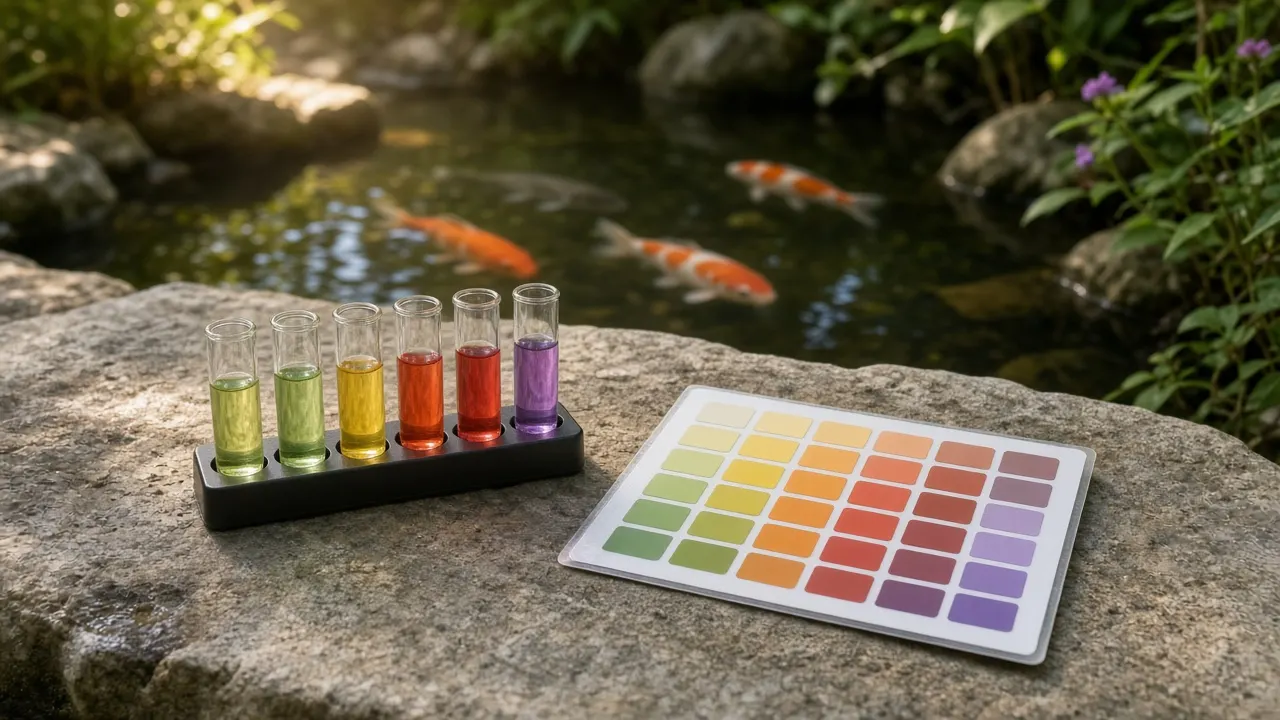
Test today, before a water change hides the evidence, and write every reading down. A liquid test kit is more reliable than strips for pond work.
| Test | What koi keepers generally aim for | Why it matters |
|---|---|---|
| Ammonia | Zero | Burns gills; rises after overfeeding, filter failure or a dead fish left in the water |
| Nitrite | Zero | Stops blood carrying oxygen; spikes when filters are new, cleaned too hard or medicated |
| pH | Steady, often in the 7s to low 8s | A fast swing in either direction stresses koi more than a slightly high or low number |
| KH (carbonate hardness) | Many keepers aim for roughly 100 ppm or more | KH buffers pH; when it runs out, pH can crash overnight |
| Temperature | Changes of only a few degrees a day | Sudden spring warm-ups and shallow ponds in heat waves both cause trouble |
A KH crash deserves special mention because it catches experienced keepers out. In a pond with heavy stocking and soft source water, the buffer is used up gradually for weeks, then pH drops sharply in a single night. If both KH and pH are low, a partial water change and a gradual KH boost are common first steps; an aquatic vet or experienced koi dealer can guide you.
Check three
Could a new fish have brought in disease?
Think back over the last two months. Did you add a koi, a goldfish, plants, or even water from another pond? Did you visit a koi show or a friend's pond and use the same net? Most keepers quarantine new fish in a separate tank for several weeks for exactly this reason. The ornamental fish trade is enormous: a peer-reviewed analysis of US wildlife imports found tropical fish making up about a quarter of the 11 billion specimens[3] of wildlife the US imported between 2000 and 2013, and fish arrive from many sources.
Two viruses worry koi keepers most. Koi herpesvirus (KHV) can spread fast and kill many koi within days, most often when the water sits between about the low 60s and low 80s °F. Spring viremia of carp (SVC) tends to strike in cool spring water. Both are listed by the World Organisation for Animal Health, and in some places suspected cases must be reported to animal health authorities. Only testing can confirm either, so if several koi sicken or die, call an aquatic vet rather than guessing.
Check four
What else can kill a healthy koi overnight?
- Predators. Herons leave stab wounds or simply take fish; raccoons and otters leave torn fins, scrapes and fish flicked onto the bank. A koi that escaped an attack may die later of stress or infected wounds.
- Chemicals and runoff. Lawn fertilizer, weed killer, insect sprays, fresh roof sealant, or a top-up with untreated tap water carrying chlorine or chloramine can all poison a pond.
- Jumping. Koi leap when water quality is poor, when spawning or when chased. A body on the patio or lawn points to one of those triggers.
- Electrical faults. A damaged pump or heater cable can leak current into the water. If fish behave oddly near equipment, switch it off at the breaker and have it checked.
Which fish are you thinking about right now?
Tap an answer to vote and see how others answered. Anonymous.
Finding the cause
Should you chill or freeze the koi for a vet?
Chill it. Freezing ruptures cells and makes a post-mortem examination (necropsy) much less useful. Place the koi in a sealed bag, rest it on ice in a cooler or on a fridge shelf, and get it to a vet as quickly as possible, ideally the same day. Bring your water readings, photos of any marks and a note of recent changes to the pond.
Aquatic vets can be hard to find. Useful places to look include the World Aquatic Veterinary Medical Association's online directory, your state's veterinary diagnostic laboratory, a university veterinary school with an aquatic or fish health service, and your local koi club, whose members usually know who treats koi nearby. Some aquatic vets make pond visits and can test the water and remaining fish on site.
If you don't need a cause, or the vet has finished, freezing is fine and gives you time to decide on aftercare.
Afterward
What are the aftercare options for a large koi?
A big koi is one of the few fish where private cremation returns a meaningful amount of ash. Remains usually weigh about 3-5% of body weight[4], so by our math a 24-inch koi of around 8 lb could leave roughly 4 to 6 ounces, enough for a small urn with some to scatter or share. Run your own koi's length and weight through the ashes weight estimator below.
Free tool
Ashes weight estimator
See roughly how much ash to expect back, by species and body weight.
One pet insurer lists US private cremation at $100 to $500 or more across all pet sizes [5], and a koi sits at the low, lightweight end, plus any collection or urn. Ashes often come back within 5-10 days[6]. Our cost comparison guide explains how to read a quote, and private versus communal cremation for fish covers the choice if you don't need ashes back.
Moving a large, wet koi takes some planning, and our transport guide for pond fish explains how to pack one. For ways to mark the spot where it used to rest in the shade, see pond-side markers. When you're ready, send us your koi's details and we'll email local options, or browse koi aftercare by area first.
How long had you kept the fish you lost, or your oldest fish now?
Tap an answer to vote and see how others answered. Anonymous.

Reader polls
What would you choose?
Vote anonymously and see how other readers answered. The results are live counts from people who visit this site, so they show real opinions, not a scientific sample.
How long had you kept the fish you lost, or your oldest fish now?
Tap an answer to vote and see how others answered. Anonymous.
What was the hardest part of losing your pet?
Tap an answer to vote and see how others answered. Anonymous.
If you had to decide today, which aftercare would you choose for your pet?
Tap an answer to vote and see how others answered. Anonymous.

Questions people ask
Can a koi die of old age without any warning?
It can happen, but it's less common than people expect. Koi can live for decades, and an older fish may slow down, eat less or lose color over months before it dies. A healthy-looking koi that dies overnight is more likely to have been hit by a water problem, so test the pond even if you suspect age.
Should I do a big water change after a koi dies?
Test first, then change water in moderate amounts. A huge change with water of a different temperature or pH can shock the remaining koi. Many keepers change around 10 to 20 percent at a time, using a dechlorinator and matching temperature, and repeat over several days if readings stay high. An aquatic vet can advise on your specific numbers.
Can a thunderstorm kill koi?
Storms can contribute. Warm, heavy, still weather before a storm lowers oxygen, a heavy downpour can shift pH and wash in garden runoff, and a power cut can stop pumps and aerators. If koi are gasping after a storm, add aeration immediately and check your equipment and water readings.
Is it safe to keep the other koi in the same pond?
Usually yes, if the cause was environmental and has been fixed. If an infection is possible, moving fish can spread it further, so ask an aquatic vet before transferring koi to another pond or tank. Hold off on adding new fish, and don't lend nets or equipment to other keepers until you know more.
Do I have to report a koi death?
A single koi death with an obvious cause normally doesn't need reporting. If several koi die and a vet suspects a disease such as koi herpesvirus or spring viremia of carp, some regions require suspected cases to be reported to animal health authorities. Your vet will know the rules where you live and handle the notification if needed.
How do I know if a heron took my koi or it died?
Herons usually leave no body at all, or a fish with deep puncture wounds on its back or sides. Other signs include koi hiding under ledges for days, missing fish after a count, and footprints in soft margins. A koi that dies from water problems is usually found whole, often near the surface or the bottom drain.
Keep reading

What to do when your fish dies
Step by step, from confirming death to choosing a goodbye.

Koi ashes weight estimator
How much ash your koi's size is likely to leave.

How to bury a pet fish
Depth and location if you'd rather bury your koi.

Ask about koi cremation
Send your koi's details and we reply by email.
Sources and our estimates
- [1] Nishikigoi (koi) typically live about 30 to 40 years depending on their environment. All Japan Nishikigoi Promotion Association - Ancient koi 'Hanako', 2024.
- [2] A koi (30-40 years) can be expected to live about 5.4 times as long as a typical goldfish (6-7 years). Our estimate: 35 / 6.5 (range midpoints). How we calculate.
- [3] From 2000-2013 the U.S. imported about 11 billion wildlife specimens; tropical fish were 25% of specimens and one-third of shipments contained live animals, mostly for the aquatic and pet industries. Smith KM et al. Summarizing US Wildlife Trade with an Eye Toward Assessing the Risk of Infectious Disease Introduction. EcoHealth, 2017 (PMID 28176029), 2017.
- [4] Embrace notes cremated remains typically weigh about 3-5% of the pet's original body weight. Embrace Pet Insurance - Bury or Cremate Your Dog? Costs, Pros & Cons, 2025.
- [5] Embrace Pet Insurance lists US communal cremation at $30-$200, partitioned at $50-$250, private at $100-$500+ and aquamation at $80-$450. Embrace Pet Insurance - Bury or Cremate Your Dog? Costs, Pros & Cons, 2025.
- [6] A US aftercare guide says many families receive private cremation ashes within about one to two weeks, with 5-10 days commonly quoted. Funeral.com - Pet Cremation Timelines: How Long Until Ashes Are Returned, 2026.
Get koi cremation options near you
Tell us what you need and where you are. We'll reply by email with clear options and prices so you can decide in your own time.