Grieving a fish is real grief, and you're allowed to feel it
Yes, it's normal to grieve a fish, sometimes deeply. How close you felt to your fish predicts how much you'll hurt far better than its species or size, and a koi you fed every morning for twenty years leaves a real gap.
By the Fish Cremation & Memorial Services editorial team · Updated September 24, 2026 · 7 min read · Sources
- Why fish loss hits harder than people expect
- Honest help with guilt about the water or equipment
- Free pet-loss helplines you can call tonight

The short answer
Is it normal to grieve this much for a fish?
Yes. Grief follows attachment, not body size. A study in the journal Death Studies compared losses of pets and people and found that closeness to whoever died was by far the strongest predictor of how hard someone grieved, whatever the species [1]. If your fish mattered to you, missing it makes complete sense.
Many people are caught off guard by the strength of it. In the RSPCA's large 2026 pet-loss survey, 66.9%[2] of respondents said they were surprised by how intense their grief felt. Fish keepers often feel that surprise twice over, because they didn't expect to be this sad and they don't feel permitted to show it.
There's no correct amount of time to feel this way, and no threshold of "important enough" a pet has to reach. A betta that greeted you at the glass for three years counts. So does a pond of koi you've tended since your children were small.
What you've actually lost
Why does losing a fish hurt more than people expect?
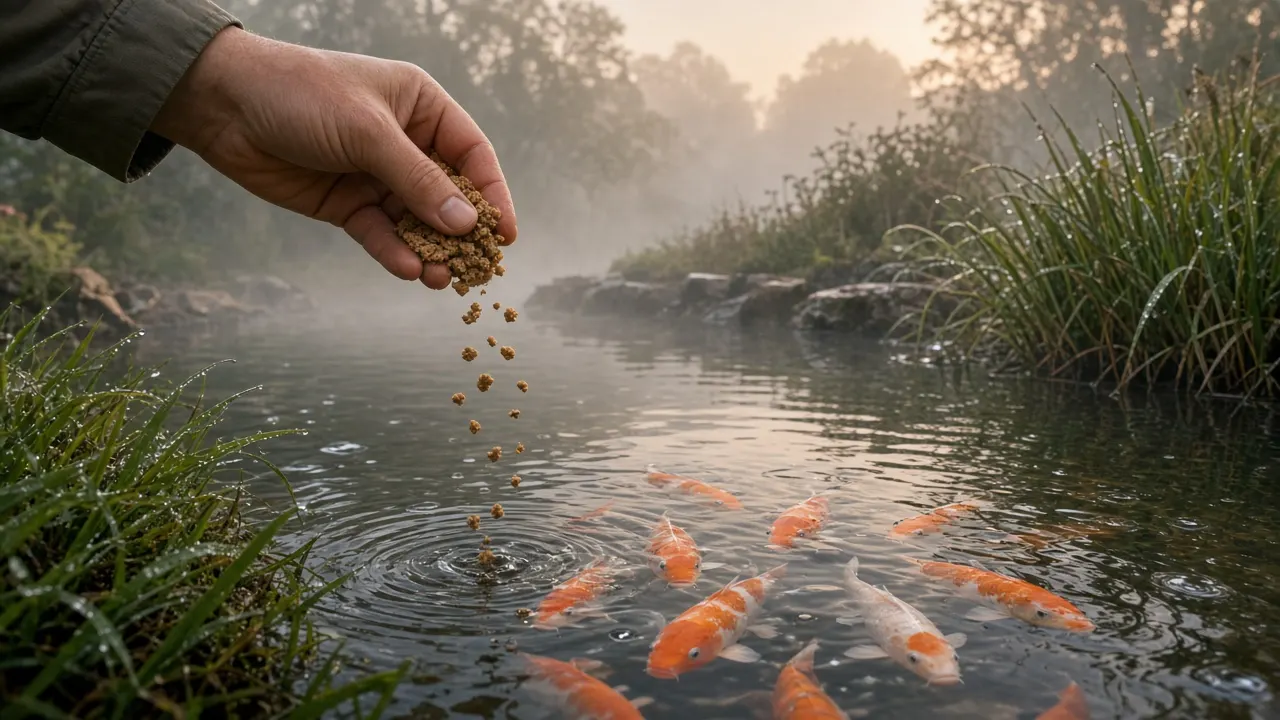
Fish are built into daily routines in a way outsiders rarely see. You fed them before coffee, checked the heater on cold nights, tested the water every weekend and noticed when one was slow to come up. When a fish dies, those small rituals stop all at once, and the silence of a bubbling filter with no one waiting at the surface is hard to walk past.
Loss of routine is one of the most common effects of pet bereavement generally. In the same RSPCA survey, 72.6% of owners said they lost their daily routine or sense of purpose after their pet died [3]. For a keeper who spent an hour a day on a pond, that loss is very concrete.
Then there's time. Koi typically live 30-40 years[4] with good care, so a mature koi may have been part of your household longer than your car, your job or your current home. Some are inherited from a parent. Grieving a fish that has been with you for decades is grieving a piece of your own history.
When others don't get it
What do you do when people say "it was just a fish"?
Grief that other people don't recognize has a name: disenfranchised grief. It's common with pets and even more so with fish. In the RSPCA research, 34.5%[5] of bereaved owners had been told "it's just a pet", 57.1%[6] felt they had to hide their grief, and only 13.4%[7] felt fully understood by the people around them.
You don't owe anyone a defense of your feelings. A few things help, though:
- Find the people who know. Your local koi club, an aquarium forum or the staff at your fish store understand exactly what a 15-year-old goldfish means.
- Say it plainly. "I had her for eleven years and I'm sad" is often enough to shift a careless comment.
- Skip the argument. Someone who has never kept fish may never get it. Save your energy for people who can hold it with you.
- Mark the loss anyway. A small goodbye makes the loss visible, even if only to you.
When your fish died, did people around you take it seriously?
Tap an answer to vote and see how others answered. Anonymous.
The question that keeps you up
Was it my fault? Coping with guilt about the water
Guilt is the feeling fish keepers mention most. Fish live inside a system you manage, so when one dies the mind goes straight to what you could have done: a missed water change, a heater that stuck on, a power cut that stopped the air pump, a new fish that brought in disease, a heron you didn't net against.
It helps to separate learning from blame. Testing the water, checking the equipment or asking an aquatic vet what happened is worth doing because it protects any fish still living with you. It is not a verdict on how much you cared. Experienced keepers with decades of practice still lose fish to sudden illness, old age and failures nobody could see coming.
If thoughts of fault keep returning for weeks, talking it through with someone outside the situation helps. The helplines further down this page are staffed by people who hear this worry often.
Several at once
What if you lost a whole tank or pond at once?
Most fish keepers have more than one fish. The American Pet Products Association found 77%[8] of US fish owners keep two or more. That makes mass losses a real possibility: a filter failure overnight, an oxygen crash on a hot, still evening, a disease outbreak, or a freeze that caught the pond. Losing an entire community at once is a shock that can feel almost unreal.
Let yourself grieve the individuals where you can. It may help to write each fish's name down, or photograph the empty tank before you break it down, so they don't blur into one event. Some families hold a single goodbye for all of them; our page on short rituals after an aquarium companion dies has simple ways to do that.
Practically, a mass loss usually means a lot of decisions at once. Communal cremation or a shared burial is a common, dignified choice for many small fish, while a large koi may warrant its own private cremation. The services page explains the options, and you can send us your details if you'd like local choices by email.
Adults and kids
How do adults and children grieve a fish differently?
Children often take a fish's death very directly. They may cry hard for an hour and then ask to play, or return to the subject days later with a blunt question. That's normal. Short, honest words work better than soft ones: "Bubbles died. His body stopped working and he can't come back." Phrases like "went to sleep" can make bedtime frightening.
Adults tend to hold it in longer, especially when they feel others will judge them. A parent may also carry a second layer, worrying about getting it right for the child while quietly missing the fish themselves. It's fine to let your child see you're sad too; it teaches them that grief is survivable.
- Let children choose one job: a drawing, a painted stone, the song or the words.
- Don't quietly replace a fish overnight with a lookalike. Kids often notice, and it teaches them loss should be hidden.
- Expect questions for weeks. Answer them simply each time.
- For simple memorial projects kids can lead, see memorial ideas that fit fish.
The weeks after
What actually helps in the first weeks?
Grief after a pet often looks like tiredness, poor sleep or trouble focusing rather than tears. Knowing that helps you give yourself some slack. Practical steps that keepers find useful:
- Decide about the tank on your own timeline. Leaving it running, draining it or putting it in the garage are all fine. There's no rush.
- Replace the ritual gently. If mornings are hardest, fill the feeding slot with a short walk or time outside by the pond.
- Make one physical reminder. A photo, a pond-side stone or a small keepsake gives the grief somewhere to go. Our guide to pond-side markers after koi loss has ideas.
- Keep costs in proportion. A memorial doesn't have to be expensive to matter. The planner below helps you set a comfortable budget.

Free tool
Memorial budget planner
Add up cremation, urn, keepsakes and a farewell so the total holds no surprises.
What helped you most in the first weeks?
Tap an answer to vote and see how others answered. Anonymous.
Someone to talk to
Where can you find free support for pet loss?
Pet-loss helplines take calls about every kind of animal, fish included. You won't be asked to justify why you're calling. In the US, Tufts University's Pet Loss Support Helpline and Cornell's Pet Loss Support Hotline are both free. They matter: by our estimate, roughly 850,000 bereaved US pet households a year may not find the grief support they need[9].
| Service | How to reach it | Details |
|---|---|---|
| Tufts Pet Loss Support Helpline (US) | 508-839-7966 | Free, volunteer-staffed, evenings Monday to Thursday, with 24-hour voicemail [10] |
| Cornell Pet Loss Support Hotline (US) | 607-218-7457 | Free; veterinary students trained by grief counselors [11] |
| Blue Cross Pet Bereavement Support (UK) | Phone or email | Free and confidential, open every day of the year [12] |
If grief is still disrupting sleep, work or eating after several months, or you feel hopeless, please talk to your doctor or a counselor. Grief that lingers isn't a failing; it's a sign you may need more support than friends can give. We explain how we choose sources like these on our research page.
Looking ahead
When is it okay to restock the tank or pond?
Emotionally, the answer is whenever you're ready, and that can mean a week or a year. Some keepers find an empty tank unbearable and want life in it quickly. Others need the space to stay still for a while. A new fish is never a replacement; it's a new relationship.
Practically, wait until you know the water is safe. If the death may have been disease, ask an aquatic vet or experienced fish store how to clean or cycle the system before adding anyone new, and quarantine new arrivals. Rushing restocking after an unexplained loss risks a second heartbreak.
When you do feel ready, it can help to think ahead about what you'd want next time, before you're in the middle of a loss. Our note on pre-planning fish aftercare walks through that quietly, and you can see how other keepers answered on the poll results page.

Reader polls
What would you choose?
Vote anonymously and see how other readers answered. The results are live counts from people who visit this site, so they show real opinions, not a scientific sample.
When your fish died, did people around you take it seriously?
Tap an answer to vote and see how others answered. Anonymous.
What helped you most in the first weeks?
Tap an answer to vote and see how others answered. Anonymous.
How long before you felt ready for another pet?
Tap an answer to vote and see how others answered. Anonymous.

Questions people ask
How long does grief for a fish usually last?
There's no set timeline. Many people feel the sharpest pain for a few days to a few weeks, then waves of it when something reminds them, like the feeding time or the sound of the filter. Long-kept fish such as koi or old goldfish can bring grief that lasts months, which is normal when an animal has been part of your routine for years.
Is it silly to cry over a betta or goldfish?
Not at all. Crying is a response to attachment and loss, and you can be attached to a small fish that recognized you and swam to the glass every day. Size and price have little to do with how much a relationship matters. If you cared for your fish, feeling sad when it dies is a natural response.
Should I tell my child the truth when their fish dies?
Yes, in simple and concrete words. Say the fish died and its body stopped working, rather than using phrases about sleep or going away. Let your child help with a small goodbye if they want to. Swapping in an identical fish tends to backfire, because children often notice and learn that loss is something to hide.
Can I call a pet loss hotline about a fish?
Yes. Pet-loss helplines support people grieving any animal, and volunteers are used to hearing from fish keepers, bird owners and reptile keepers as well as dog and cat owners. In the US, Tufts and Cornell both run free lines, and in the UK the Blue Cross service is free and open every day.
Why do I feel guilty even though I did everything right?
Because you were responsible for the fish's whole environment, your mind searches for something you could have changed. Guilt is a very common part of grief, even when nothing was your fault. Fish die from age, hidden illness and sudden equipment failures that even expert keepers can't always prevent. Learning from what happened is useful; punishing yourself isn't.
Should I keep the empty tank set up after my fish dies?
Do whatever feels bearable. Some people keep the filter running so the tank stays ready, some drain it and store it, and some leave it untouched for a while because putting it away feels too final. If disease was possible, clean and disinfect the equipment before using it again, but there's no emotional deadline.
Keep reading

Memorial ideas that fit fish
Gyotaku prints, water lilies, pendants and kids' projects.

Short goodbye rituals for aquarium fish
Simple ways to mark the loss, alone or as a family.

Fish aftercare services
Cremation, burial and keepsakes sized to your fish.

Ask us for local options
Tell us about your fish and we'll reply by email.
Sources and our estimates
- [1] A Death Studies paper comparing pet and human loss found closeness to the deceased was overwhelmingly the strongest predictor of grief severity, whatever the species. Europe PMC abstract — Eckerd, Barnett & Jett-Dias, 'Grief following pet and human loss: Closeness is key', Death Studies (2016), doi:10.1080/07481187.2016.1139014, 2016.
- [2] 66.9% of respondents were surprised by how intense their grief was after losing a pet. RSPCA — Pet Loss Survey Results, 2026.
- [3] After losing a pet, 72.6% lost their daily routine or sense of purpose, 69.8% had trouble concentrating and 65.9% had sleep problems. RSPCA — Pet Loss Survey Results, 2026.
- [4] Nishikigoi (koi) typically live about 30 to 40 years depending on their environment. All Japan Nishikigoi Promotion Association - Ancient koi 'Hanako', 2024.
- [5] 34.5% of bereaved pet owners were told 'it's just a pet'. RSPCA — Pet Loss Survey Results, 2026.
- [6] 57.1% felt they had to hide their grief after a pet died, and 57.8% perceive stigma around pet loss. RSPCA — Pet Loss Survey Results, 2026.
- [7] Only 13.4% of bereaved pet owners felt fully understood by others. RSPCA — Pet Loss Survey Results, 2026.
- [8] 77% of U.S. fish owners keep two or more fish (APPA 2025). American Pet Products Association - From Bigger Tanks to Stronger Bonds: Fish & Reptile Ownership Evolves in 2025, 2025.
- [9] Roughly 850,000 bereaved U.S. pet households a year may not find the grief support they need. Our estimate: 1.5M pet cremations x 56.7% couldn't find support. How we calculate.
- [10] Tufts University's Pet Loss Support Helpline (508-839-7966) is free and volunteer-staffed, 6–9 pm ET Monday to Thursday, with 24-hour voicemail. Tufts Cummings School of Veterinary Medicine, 2026.
- [11] Cornell's free Pet Loss Support Hotline (607-218-7457) is staffed by veterinary students trained by professional grief counselors. Cornell University College of Veterinary Medicine, 2026.
- [12] Blue Cross's Pet Bereavement Support Service in the UK is a free, confidential phone and email helpline open 365 days a year. Wikipedia – Blue Cross (animal charity), 2026.
Get gentle aftercare options for your fish
Tell us what you need and where you are. We'll reply by email with clear options and prices so you can decide in your own time.