Planning ahead for an old koi or goldfish, while there's time
Koi can live 30 to 40 years, so planning their aftercare early is simply practical: decide between private cremation, communal cremation or burial, note who will look after the pond if you can't, and put a small budget aside. Half an hour now saves a rushed decision on a hot afternoon later.
By the Fish Cremation & Memorial Services editorial team · Updated September 24, 2026 · 4 min read · Sources
- Decide cremation or burial before you need to
- Name who inherits the pond and its fish
- Photos and measurements worth taking now
The short answer
Why plan aftercare for a fish that's still swimming?
Because fish tend to die suddenly, and often at inconvenient times: a hot weekend, a power cut, the week you're away. Deciding now between private cremation, communal cremation and burial, knowing a provider's number, and having freezer space ready turns a scramble into a short, calm routine.
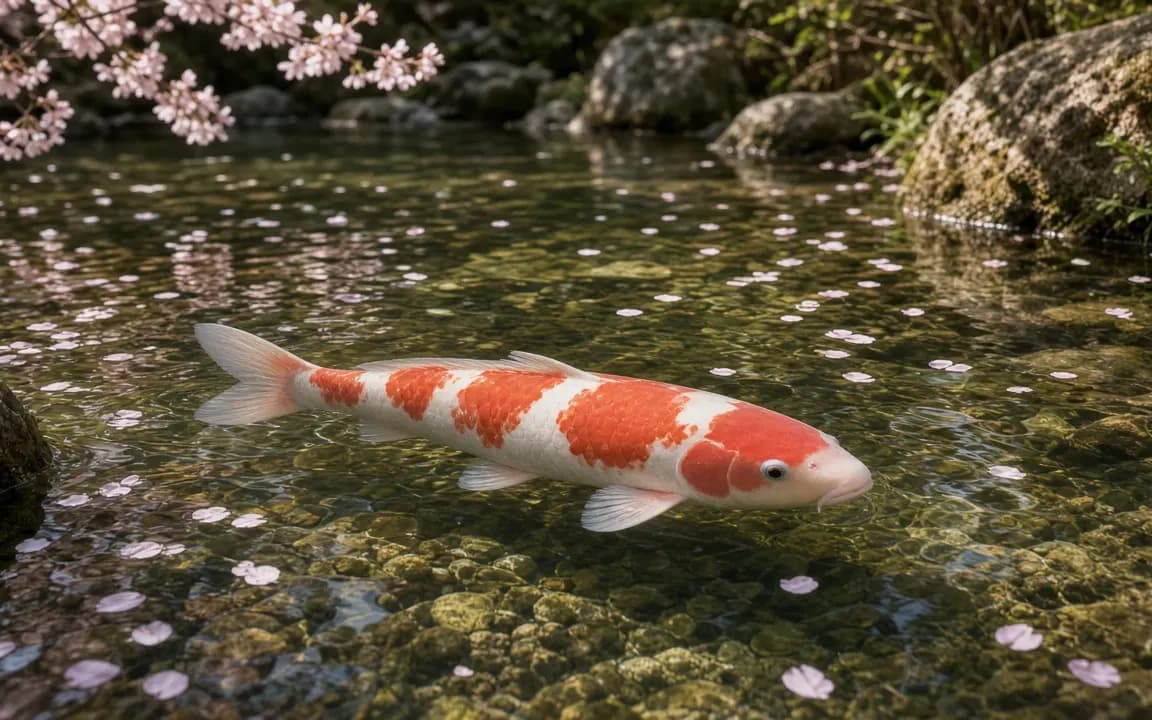
The case is strongest for koi. Nishikigoi typically live about 30-40 years[1], according to the Japan Nishikigoi Promotion Association, which means a fish bought in your thirties may still be in the pond at your retirement party, or at your estate sale. Planning is as much about the fish outliving you as the other way round.
How long had you kept the fish you lost, or your oldest fish now?
Tap an answer to vote and see how others answered. Anonymous.
Knowing the timeline
How old is old for a koi or a goldfish?
Goldfish typically live 6-7 years[2], though well-kept pond goldfish often pass that. A koi can be expected to live about 5.4x[3] as long as a typical goldfish. Famous claims go much higher: one Japanese koi was once listed at over 200 years old, though the koi association now considers that age incorrect [4].
Age alone doesn't tell you much. Older fish may feed less eagerly, spend more time near the bottom, and struggle more in warm, low-oxygen summer water. If you notice changes, an aquatic vet can check whether it's age, water quality or something treatable. Either way, it's a good cue to finish the plan below.
The part most people skip
Who looks after the pond if you move or die?
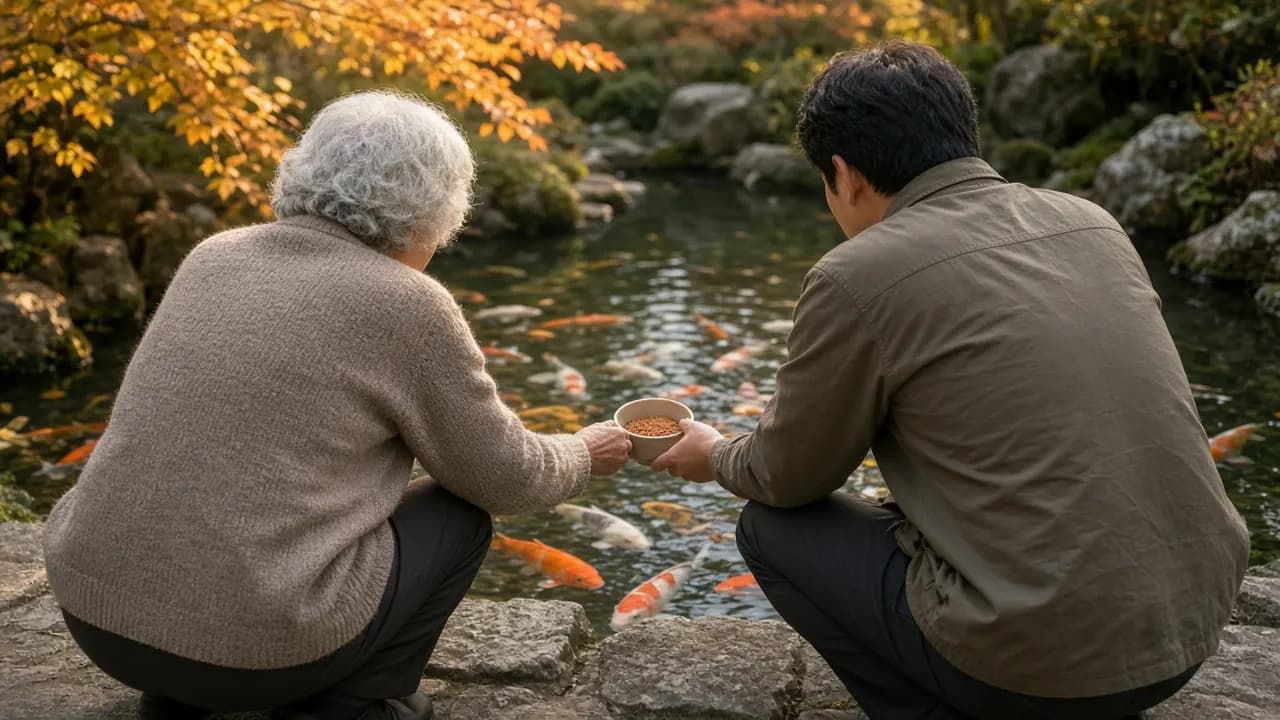
A pond can't be packed in a moving van. If you sell the house, the fish either go with you to a new pond, move to a friend or a local koi club member, or stay with the buyer, who may have no idea how to care for them. Put the fish into the conversation early, not at closing.
- Name a caretaker. Ask a family member, neighbor or koi-keeping friend if they'd take the fish, and write their name down.
- Mention the fish in your will or letter of wishes. A short note about who gets the koi, and any money set aside for their care, removes guesswork for your family.
- Leave care notes. Feeding, filter cleaning, winter heater routine, and which aquatic vet you use.
- Never release fish into the wild. Minnesota's natural resources agency says to never release[5] unwanted goldfish; rehome them through a store, hobbyist or surrender event instead.
The main decision
Should you choose cremation or burial in advance?
Yes, at least in outline. The choice follows your fish's size. A large koi returns enough remains for a small urn, so private cremation is a real option. A small goldfish or tank fish may leave almost nothing, so communal cremation or burial often fits better. Our comparison of private and communal cremation goes through the trade-offs.
Think about the ground as well. Frozen soil rules out winter burial in many states, and a pond-side grave isn't wise if disease is ever suspected. Knowing which way you'd lean for each fish, and why, means whoever is home can act. Browse the services page for the full list, or ask providers the questions in what to ask a provider now, while nobody's in a hurry.
Setting money aside
How much should you budget for a fish's aftercare?
Plan around the smallest weight band. In the US, CareCredit's guide lists communal cremation at $45 to $75 and private at $100 to $175 for pets up to 30 lb [6], and a koi falls inside that. Add a keepsake urn at $15–$60[7] and perhaps an engraved garden stone, which starts from $38.95[8] at one large retailer.

Free tool
Memorial budget planner
Add up cremation, urn, keepsakes and a farewell so the total holds no surprises.
The planner above adds a memorial to the cremation cost so you can see one total. Worrying about money is normal: in one US survey, 61% of owners said aftercare cost concerned them [9]. For line-by-line quotes, see our cost guide, or estimate a figure with the cremation cost calculator.
Would you pre-pay for aftercare while your pet is still healthy?
Tap an answer to vote and see how others answered. Anonymous.
Kit and space
What practical things can you prepare now?
- Freezer space. Measure your biggest koi and check it could lie flat in your freezer. If not, ask a neighbor with a chest freezer whether you could borrow room.
- A small kit. Two heavy-duty bags, an old towel, gloves, a marker and a cooler, kept together in the shed.
- Phone numbers. Your aquatic vet, one or two providers, and your chosen caretaker, stored in your phone and taped inside the shed door.
- A water test kit. If one fish dies, testing ammonia and oxygen the same day protects the rest.
Our guide to transport and logistics walks through netting and moving a large fish, so you'll know what the kit is for.
While they're here
Why take photos and measurements now?
Once a fish is gone, you can't go back for a better photo. Take a few clear pictures from above in good light, a short video of feeding time, and note each fish's length, variety and the year you got it. It takes one sunny afternoon.
These records have practical uses. A length and weight let a provider estimate how much ash to expect. A good photo is what an artist needs for a painting or an engraved stone, and our pond-side markers guide shows how families use them. If you'd like providers' details on file now, send us a note and we'll email local options.

Reader polls
What would you choose?
Vote anonymously and see how other readers answered. The results are live counts from people who visit this site, so they show real opinions, not a scientific sample.
How long had you kept the fish you lost, or your oldest fish now?
Tap an answer to vote and see how others answered. Anonymous.
Would you pre-pay for aftercare while your pet is still healthy?
Tap an answer to vote and see how others answered. Anonymous.
When did you (or will you) decide on aftercare?
Tap an answer to vote and see how others answered. Anonymous.


Questions people ask
Can I leave my koi to someone in my will?
Pets are generally treated as property, so you can name who should receive your fish in a will, just as you would with other belongings. Talk to the person first so they're willing and able. Some families also set aside a sum for pond upkeep. A lawyer can advise on the right wording where you live.
Should I pre-pay a crematory for my fish?
Few pet crematories offer pre-paid plans for fish, and prepaying ties you to one business that may change hands. Setting money aside yourself, and keeping a provider's details on file, usually gives the same peace of mind with more flexibility.
What if I'm away when my fish dies?
Tell your pond sitter what to do: lift the fish out, bag it, freeze it and call you. With a written plan and a kit in the shed, they won't have to guess, and you can make the final decision when you're home. A frozen fish can wait until you're back.
How do I rehome old koi if I'm moving?
Ask local koi clubs, aquatic stores and hobbyist groups, and give yourself months rather than days. Older koi can be harder to rehome, so start early and share their history and care notes. Never release them into a lake or stream; that can harm native fish and is illegal in many places.
Is it morbid to plan for a pet fish's death?
Most people find it a relief rather than morbid. The planning takes an hour at most, and it means that if a long-lived koi dies on a busy summer day, you already know what you'd like to happen. Many families feel it's a way of respecting how long the fish has been part of their lives.


Sources and our estimates
- [1] Nishikigoi (koi) typically live about 30 to 40 years depending on their environment. All Japan Nishikigoi Promotion Association - Ancient koi 'Hanako', 2024.
- [2] Goldfish typically live 6-7 years, usually grow 5-8 inches but can approach 2 feet and 6 pounds; releasing them into Minnesota waters is illegal. Minnesota DNR - Goldfish (Carassius auratus) invasive species page.
- [3] A koi (30-40 years) can be expected to live about 5.4 times as long as a typical goldfish (6-7 years). Our estimate: 35 / 6.5 (range midpoints). How we calculate.
- [4] The famous koi 'Hanako' was listed at 223 years old from scale rings, but the Japanese koi association now says the age is considered incorrect because koi scales form multiple ridges per year. All Japan Nishikigoi Promotion Association - Ancient koi 'Hanako', 1977.
- [5] Minnesota DNR advises owners of unwanted goldfish to return them to a retailer, use a surrender event, rehome with hobbyists, or ask a veterinarian or pet retailer about humane disposal, never releasing them. Minnesota DNR - Goldfish (Carassius auratus) invasive species page.
- [6] CareCredit's pet cremation guide lists US communal cremation at $45-$75 and private at $100-$175 for pets up to 30 lb. CareCredit (Synchrony) - How Much Does Pet Cremation Cost? (Sept 2023), 2023.
- [7] Keepsake or mini pet urns cost about $15–$60, versus $25–$100 for small and $40–$200 for medium urns (Memorials.com). Memorials.com – Pet Urn Cost Guide, 2025.
- [8] Memorials.com's engraved pet garden stones start at $38.95, cultured-stone markers at $87.95 and flat granite markers at $157.95. Memorials.com – Pet Memorial Stones, 2026.
- [9] 61% of US owners in the Cooney survey rated the cost of after-death body care as a concern (27.9% concerned, 33.1% very concerned). Cooney, Kogan, Brooks, Ellis - Pet Owners' Expectations for Pet End-of-Life Support and After-Death Body Care, Topics in Companion Animal Medicine (2020), 2020.
Get local options on file before you need them
Tell us what you need and where you are. We'll reply by email with clear options and prices so you can decide in your own time.