Koi and aquarium fish cremation in Battle Ground
A pond koi and a tank tetra need very different goodbyes. Here's who in and around Battle Ground will cremate a fish, what it costs and what to do when there'll be almost no ash.
- Koi, goldfish and tropical fish
- Written prices, no pressure
- Burial and keepsake ideas included
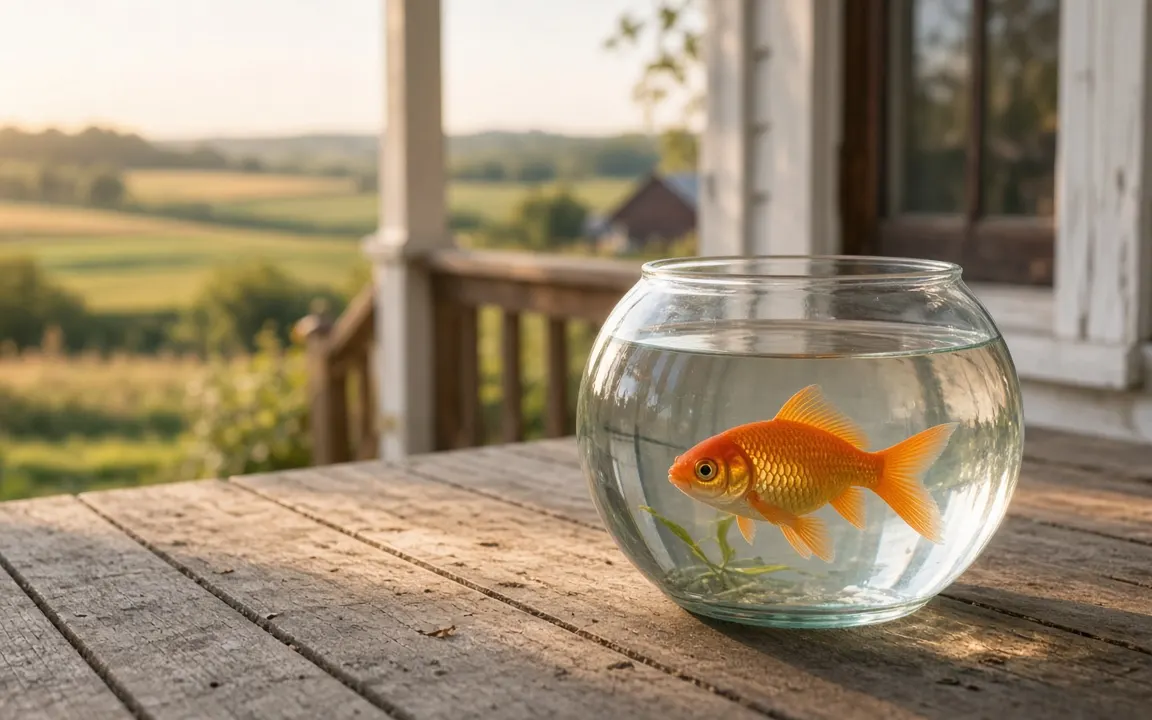
Battle Ground, Washington
Who will cremate a fish in Battle Ground?
Battle Ground grew from a farm crossroads into one of north Clark County's busier suburbs, yet many households here still keep chickens, rabbits or a couple of barn cats on an acre or two out past the newer tracts. Portland lies roughly 19 miles south, with Vancouver nearer still, so most aftercare services reaching town drive up from that side of the county. Asking early whether they cover your particular road, and what the extra miles cost, saves a second phone call later.
Battle Ground Lake State Park, a small volcanic lake ringed by Douglas fir a few miles northeast of downtown, draws local families who swim, fish and camp each summer. People often picture spots like that when they think about ashes. Because it's state parkland, contact the park before scattering anything there; a flower border or a shady patch of your own yard, by contrast, is yours to use however feels fitting.
Around Battle Ground, plenty of families keep fish in garden ponds, stock tanks or a farm pond, and losses often happen in summer or right after the ice melts. If a fish dies in a pond that also serves livestock or feeds a creek, lift it out quickly and don't bury it near the water's edge. A burial further up the garden, or a cremation, keeps anything that caused the death away from the other fish.
With roughly 23,513 residents, Battle Ground is the 50th-largest of the 67 Washington communities we cover. Some of the providers who serve Battle Ground are based about 19 miles away in Portland, the nearest larger centre, so collection times reflect that drive.
For a second opinion on price, Vancouver (10 miles, a larger centre), Camas (13 miles) and Washougal (16 miles) are close enough that their providers cover Battle Ground routinely. Two written quotes tell you more than any price list.
79.1%[1]
Washington had a 79.1% cremation rate in 2024, among the highest in the US.
10 million[2]
About 10 million US households keep freshwater fish.
13%[3]
13% of UK households keep an indoor fish tank.
3-5% of body weight[4]
Embrace notes cremated remains typically weigh about 3-5% of the pet's original body weight.
We built the this numbers from American Pet Products Association (APPA) 2025 National Pet Owners Survey release and Embrace Pet Insurance, and both are worth a look if you want the detail.
What local funeral customs suggest for a pet fish
Cremation is the norm in Washington, where about 79.1%[1] of people are cremated. That doesn't make it the right choice for every fish. A tiny tank fish may leave nothing you could collect, and many families here pair a communal cremation or a garden burial with a memorial that needs no ash at all: a photo print, a plant or a favorite ornament from the tank. What matters is that the goodbye fits the fish.
We take the Washington rate from Direct Cremate (citing CANA) (2024). It is a human statistic; there is no equivalent pet figure for Battle Ground, and we would rather show a real number than invent one.
What the seasons mean for fish in Battle Ground
Frozen ground is the practical problem for a fish that dies in a Battle Ground winter. With lows below freezing for 3 months of the year, a garden burial may simply not be possible until spring. That's fine. Seal your fish in a bag, label it and keep it in the freezer. Many families find it comforting to wait and bury their fish when they're planting the garden.
Spring clean-outs are when many Battle Ground pond owners find out how winter went. If you lose fish as the water warms, test it straight away: rotting leaves and a winter's worth of waste can spike ammonia just as fish start feeding again. Freeze any fish you lose until the water is stable, then decide on cremation or a burial in the newly thawed ground.
Why a small fish still has a minimum price
Most families receive private cremation ashes back in about 5-10 days[5], and small pets are often among the quicker ones. For a fish in Battle Ground, the price usually follows the provider's minimum for the smallest pets, as in the table below. Water cremation, where it's offered, falls in similar bands. If your fish is very small, ask whether a symbolic return costs the same as a private cremation.
Rather than repeat the price table on every city page, we keep one for Washington: Washington costs. What each service includes is on the services page.

Free tool
Cremation cost calculator
Estimate a realistic price range for your pet's size, location and the type of cremation.
Local rules in Washington
You don't need a permit to have a fish cremated, but what you do with the body or the ashes can be governed by local rules. The most important one for fish keepers applies to living fish: never release a fish, or empty a pond or tank, into a creek, lake or drain. Many places restrict releasing non-native fish because they can spread disease and crowd out wildlife.
Not sure which office covers Battle Ground? The Washington local government directory is the official list.
The rules that apply across Washington (home burial, scattering and who oversees pet cremation) are summarized on our Washington page. Battle Ground may add its own conditions, so check with the city or county before digging.
A calm plan for a fish's aftercare
- If a big koi is going for private cremation, take its length and get a rough weight by standing on bathroom scales holding the bagged fish.
- Photograph its markings before it goes in the freezer. A photo can be checked against the paperwork later, and many families treasure it regardless.
- Wrap it in an old towel inside two strong bags, then lay it flat in the freezer so it slides into a cooler later.
- Call a provider that has cremated fish before and ask how much ash it expects and how it tracks each pet.
- Work out the urn size using the urn size calculator first, so you don't buy the wrong one.
- Drive it over in an insulated box with frozen gel packs, and think ahead about a home for the ashes, whether that's indoors on a shelf, out in the garden or beside the pond.
Ways to mark the spot
Frost settles over north Clark County on many December, January and February nights, while August afternoons here can touch 80F. Which end of that range you're in shapes the next few hours. On a chilly evening, the far corner of a garage without heat keeps a small companion cool enough to wait for daylight; in a late-summer hot spell, try to have someone come before dark. Laying the animal on a folded blanket it knew, somewhere quiet, makes those hours easier on the whole family.
the planning tools turn your pet's details into figures, Our services overview lays out every option side by side, or compare your instinct with the poll results, look through our guides and the blog. Close to Battle Ground we also cover Spokane, Vancouver, Tacoma and Kent; the full list for Washington and for the United States is a click away.

Reader polls
What would you choose?
Vote anonymously and see how other readers answered. The results are live counts from people who visit this site, so they show real opinions, not a scientific sample.
How long had you kept the fish you lost, or your oldest fish now?
Tap an answer to vote and see how others answered. Anonymous.
Would you keep your fish in the freezer while you decide what to do?
Tap an answer to vote and see how others answered. Anonymous.
If you had to decide today, which aftercare would you choose for your pet?
Tap an answer to vote and see how others answered. Anonymous.

Free tools to help you plan
Cremation cost calculator
Estimate a realistic price range for your pet's size, location and the type of cremation.
Ashes weight estimator
See roughly how much ash to expect back, by species and body weight.

Aftercare options compared
Compare private, communal and water cremation with burial on cost, timing and what comes home.
Questions people ask
How does Battle Ground's weather affect fish aftercare?
August is the hottest month in Battle Ground, with average highs around 80°F, so prompt collection matters most then. Average lows drop below freezing in January, February and December, which can make digging a grave hard until spring.
Can a provider from a neighbouring town collect from Battle Ground?
Usually yes. Vancouver is about 10 miles away, Camas is about 13 miles away and Washougal is about 16 miles away, all inside a normal collection radius. Get the mileage written into the quote so there is no surprise on the day.
How do Washington attitudes to cremation compare?
Direct Cremate (citing CANA) (2024) puts the Washington human cremation rate at about 79.1%[1]. We show it on the Battle Ground page because pet aftercare choices tend to track it: where cremation is normal for people, communal and private pet cremation are both easy to find.
Will I have to travel to Portland to arrange things?
Not usually. Providers based in Portland (roughly 19 miles from Battle Ground) collect from here as a matter of routine, and the paperwork is done by email or phone. If you want to be present for a witnessed cremation, that is when the drive matters.
How long will it take to get my fish's ashes back in Battle Ground?
Many families receive private cremation ashes in about one to two weeks. In a smaller town, where the cremation happens in a larger city such as Portland, it may take a little longer, especially if your vet has a weekly collection. Ask for an expected return date when you book.
Is a fish really a pet worth cremating?
If it mattered to you, yes. Koi can live 30 to 40 years and many families have kept the same fish for decades. A goldfish can live 6 to 7 years. The time you spent feeding, watching and caring for a fish is real, and so is the grief. Choose the goodbye that fits the fish and your family.


Sources and our estimates
- [1] Washington had a 79.1% cremation rate in 2024, among the highest in the US. Direct Cremate (citing CANA), 2024.
- [2] About 10 million US households keep freshwater fish. American Pet Products Association (APPA) 2025 National Pet Owners Survey release, 2025.
- [3] 13% of UK households keep an indoor fish tank. UK Pet Food (formerly PFMA) Pet Population 2026, 2026.
- [4] Embrace notes cremated remains typically weigh about 3-5% of the pet's original body weight. Embrace Pet Insurance - Bury or Cremate Your Dog? Costs, Pros & Cons, 2025.
- [5] A US aftercare guide says many families receive private cremation ashes within about one to two weeks, with 5-10 days commonly quoted. Funeral.com - Pet Cremation Timelines: How Long Until Ashes Are Returned, 2026.
- [6] A koi (30-40 years) can be expected to live about 5.4 times as long as a typical goldfish (6-7 years). Our estimate: 35 / 6.5 (range midpoints). How we calculate.
Find a Battle Ground provider that accepts fish
Tell us what you need and where you are. We'll reply by email with clear options and prices so you can decide in your own time.