Koi and aquarium fish cremation in Woodstock
A pond koi and a tank tetra need very different goodbyes. Here's who in and around Woodstock will cremate a fish, what it costs and what to do when there'll be almost no ash.
- Freezer tips so nothing is rushed
- Private or communal cremation explained
- Help keeping the rest of the pond safe
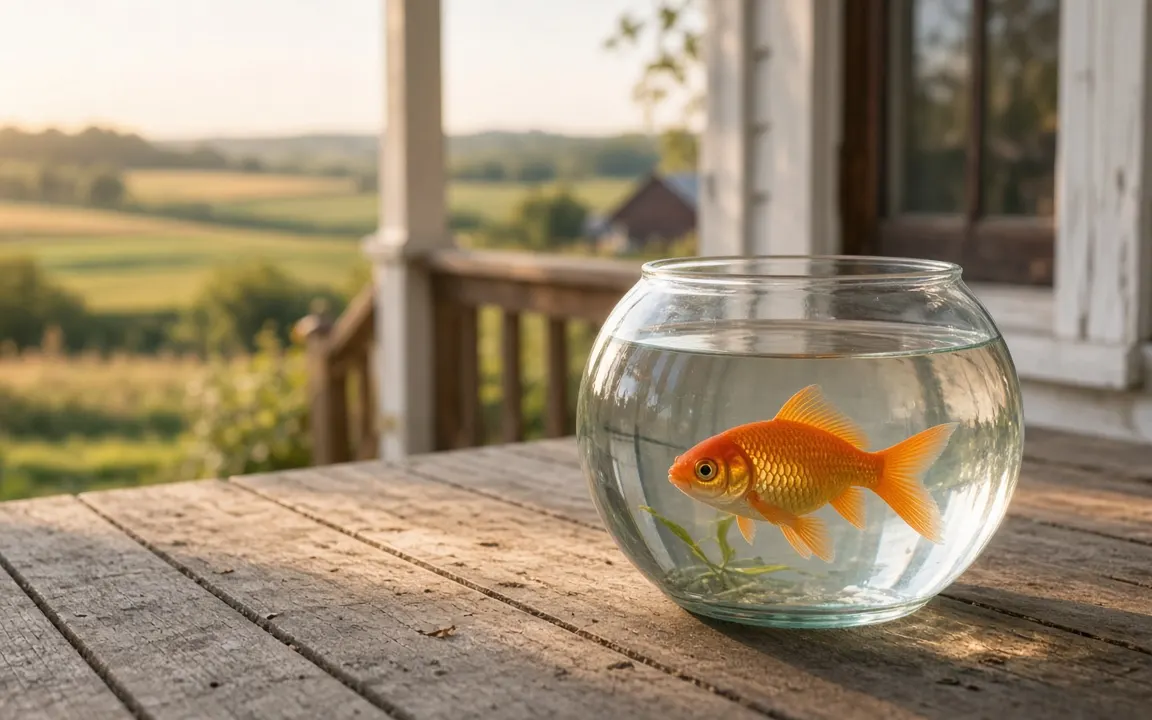
Woodstock, Vermont
What happens when a pet fish dies in Woodstock
Mount Tom rises directly above the village, its carriage roads and forest paths linking to the national historical park that protects much of the hillside. Residents climb it in every season. Scattering in a national park usually needs a permit, so if you hope to leave part of a companion's remains outdoors, a family garden, a private meadow or a friend's woodlot is the simpler route.
Frost settles on Woodstock from November well into April, January nights bottoming near 8F, so a garden grave is off the table for half the year. Cremation is therefore what most owners of a cat, ferret or lovebird choose. July afternoons can touch 80F, and in that warmth a same-day collection is wise. In midwinter, keep the body inside, away from stoves and heating vents, until pickup is confirmed.
In smaller communities like Woodstock, wells and septic systems are common, and both are good reasons not to flush a fish. A fish that died of a parasite or infection shouldn't go into any drain, and burial needs care too: keep the grave well away from the well head and any drainage field. If you're unsure, freezing the fish and taking it for a communal cremation avoids the question altogether.
About 903 people live in Woodstock, which makes it the 12th-largest of the 12 Vermont communities we cover.
If you want to compare providers, look at Hanover (13 miles, a larger centre), Lebanon (13 miles, a larger centre) and Claremont (19 miles, a larger centre). Distance matters because pickup fees and the time until the ashes come back both grow with the drive.
78.1%[1]
The NFDA projected Vermont's cremation rate at 78.1% for 2024.
10 million[2]
About 10 million US households keep freshwater fish.
13%[3]
13% of UK households keep an indoor fish tank.
3-5% of body weight[4]
Embrace notes cremated remains typically weigh about 3-5% of the pet's original body weight.
If a number here surprises you, the primary material is UK Pet Food (formerly PFMA) Pet Population 2026 and American Pet Products Association (APPA) 2025 National Pet Owners Survey release; we only apply it to this.
Local attitudes to cremation
Cremation is the norm in Vermont, where about 78.1%[1] of people are cremated. That doesn't make it the right choice for every fish. A tiny tank fish may leave nothing you could collect, and many families here pair a communal cremation or a garden burial with a memorial that needs no ash at all: a photo print, a plant or a favorite ornament from the tank. What matters is that the goodbye fits the fish.
That Vermont rate is a human one, published by NFDA 2024 Cremation & Burial Report state projections (via Occasional Sage) (2024). We quote it for Woodstock only as a pointer to how families here already think about cremation.
Season by season: fish losses in Woodstock
Woodstock winters are cold, with average lows at or below freezing in January, February, March, April, November and December. Pond fish slow right down in winter and live under the ice, but they still need a small opening for gases to escape. Many keepers use a floating de-icer or keep an air pump running near the surface. Losses under the ice, sometimes called winterkill, are usually only discovered when the pond thaws.
Spring clean-outs are when many Woodstock pond owners find out how winter went. If you lose fish as the water warms, test it straight away: rotting leaves and a winter's worth of waste can spike ammonia just as fish start feeding again. Freeze any fish you lose until the water is stable, then decide on cremation or a burial in the newly thawed ground.
Fish cremation quotes in Woodstock: what's normal
Where a Woodstock provider offers water cremation, ask for both of its versions. By our estimate, private aquamation runs about two and a half times the price of communal aquamation at the same provider[5]. The process uses roughly the water of 1–3 pet baths[6], according to the Veterinary Sustainability Alliance, which appeals to many people saying goodbye to a water animal. What comes back is a soft white powder instead of grey ash, and the national price bands appear in the table below.
The Vermont price table breaks costs down by size; our services page explains what sits behind each line.

Free tool
Cremation cost calculator
Estimate a realistic price range for your pet's size, location and the type of cremation.
Before you bury, scatter or rehome in Vermont
You don't need a permit to have a fish cremated, but what you do with the body or the ashes can be governed by local rules. The most important one for fish keepers applies to living fish: never release a fish, or empty a pond or tank, into a creek, lake or drain. Many places restrict releasing non-native fish because they can spread disease and crowd out wildlife.
Not sure which office covers Woodstock? The Vermont local government directory is the official list.
The rules that apply across Vermont (home burial, scattering and who oversees pet cremation) are summarized on our Vermont page. Woodstock may add its own conditions, so check with the city or county before digging.
A checklist for Woodstock fish keepers
- If a big koi is going for private cremation, measure it and weigh it roughly on bathroom scales, holding the bag.
- Photograph its markings before freezing. Some families like a picture to compare with the paperwork, and it's a lovely keepsake anyway.
- Wrap it in an old towel inside two strong bags, then lay it flat in the freezer so it slides into a cooler later.
- Call a provider that has cremated fish before and find out roughly how much ash to expect and how each pet stays identified.
- Work out the urn size with the urn size calculator before you buy anything.
- Drive it over in an insulated box with frozen gel packs, and think ahead about a home for the ashes, whether that's indoors on a shelf, out in the garden or beside the pond.
Small memorials for a small life in Woodstock
Woodstock village has only about nine hundred residents, gathered around an oval green, a covered bridge and the Ottauquechee River in Windsor County. Most homes are older houses on roomy lots, with more scattered through the surrounding town and hills. Clinics in the village are few, so check with your Upper Valley practice now about which cremation service it works with and whether that business will drive out to a Woodstock address.
browse in-depth guides or recent articles, Our services overview lays out every option side by side, use the free tools before you ring anyone, or look at how readers voted in our polls. Close to Woodstock we also cover Essex Junction, Barre, South Burlington and Winooski; the full list for Vermont and for the United States is a click away.

Reader polls
What would you choose?
Vote anonymously and see how other readers answered. The results are live counts from people who visit this site, so they show real opinions, not a scientific sample.
Before reading about it, what did you think happens to a flushed fish?
Tap an answer to vote and see how others answered. Anonymous.
Was a fish your child's first pet?
Tap an answer to vote and see how others answered. Anonymous.
If you had to decide today, which aftercare would you choose for your pet?
Tap an answer to vote and see how others answered. Anonymous.

Free tools to help you plan
Cremation cost calculator
Estimate a realistic price range for your pet's size, location and the type of cremation.

Ashes weight estimator
See roughly how much ash to expect back, by species and body weight.

Aftercare options compared
Compare private, communal and water cremation with burial on cost, timing and what comes home.
Questions people ask
Which nearby towns can I compare with Woodstock?
The closest communities we cover are Hanover (about 13 miles), Lebanon (about 13 miles) and Claremont (about 19 miles). Providers based in those places often serve Woodstock too. Ask each one for a written total that includes collection, so the distance is priced in.
When is the hardest time of year to arrange a burial in Woodstock?
January, February, March, April, November and December: average lows are below freezing then, and frozen ground makes a home grave slow or impossible until it thaws. The other pressure point is July, when highs around 80°F mean a body needs cooling and collecting quickly.
How do Vermont attitudes to cremation compare?
NFDA 2024 Cremation & Burial Report state projections (via Occasional Sage) (2024) puts the Vermont human cremation rate at about 78.1%[1]. We show it on the Woodstock page because pet aftercare choices tend to track it: where cremation is normal for people, communal and private pet cremation are both easy to find.
How much ash does a fish leave after cremation?
Cremated remains usually weigh about 3 to 5% of body weight, and fish tend toward the low end because they're mostly water with fine bones. A large koi might return a few ounces, enough for a small urn. A pond goldfish may leave a keepsake vial's worth. A small tank fish may leave nothing you could collect separately.
Is it okay to flush a dead fish?
It's better not to. Fish can carry parasites and bacteria that shouldn't reach rivers, and wastewater isn't always fully treated, especially during storms. Never flush a fish that might still be alive. Burying it in the garden or a planter, or freezing it until you arrange cremation, is kinder and safer, and children often find a small burial less upsetting than a flush.
Can I bury a fish near a farm pond or well near Woodstock?
Keep any burial well away from ponds, streams and wells, especially if the fish died of disease. Rain can carry anything in the soil back into water that other animals or people use. Choose a spot further up the garden, or choose cremation instead.


Sources and our estimates
- [1] The NFDA projected Vermont's cremation rate at 78.1% for 2024. NFDA 2024 Cremation & Burial Report state projections (via Occasional Sage), 2024.
- [2] About 10 million US households keep freshwater fish. American Pet Products Association (APPA) 2025 National Pet Owners Survey release, 2025.
- [3] 13% of UK households keep an indoor fish tank. UK Pet Food (formerly PFMA) Pet Population 2026, 2026.
- [4] Embrace notes cremated remains typically weigh about 3-5% of the pet's original body weight. Embrace Pet Insurance - Bury or Cremate Your Dog? Costs, Pros & Cons, 2025.
- [5] Private pet aquamation costs about 2.5 times communal aquamation at the same provider. Our estimate: mean of tier ratios 150/50, 200/75, 250/100, 350/150, 450/225. How we calculate.
- [6] Aquamation uses about the same water per pet as 1–3 pet baths. Veterinary Sustainability Alliance — Aquamation, 2024.
Get koi and fish aftercare options by email
Tell us what you need and where you are. We'll reply by email with clear options and prices so you can decide in your own time.