Koi and aquarium fish cremation in Prior Lake
Fish are real pets, and some live for decades. We explain fish cremation in Prior Lake in plain words, including when a small fish is better honored another way.
- What to do in the first hour
- What a small-pet minimum really costs
- Options emailed for your area
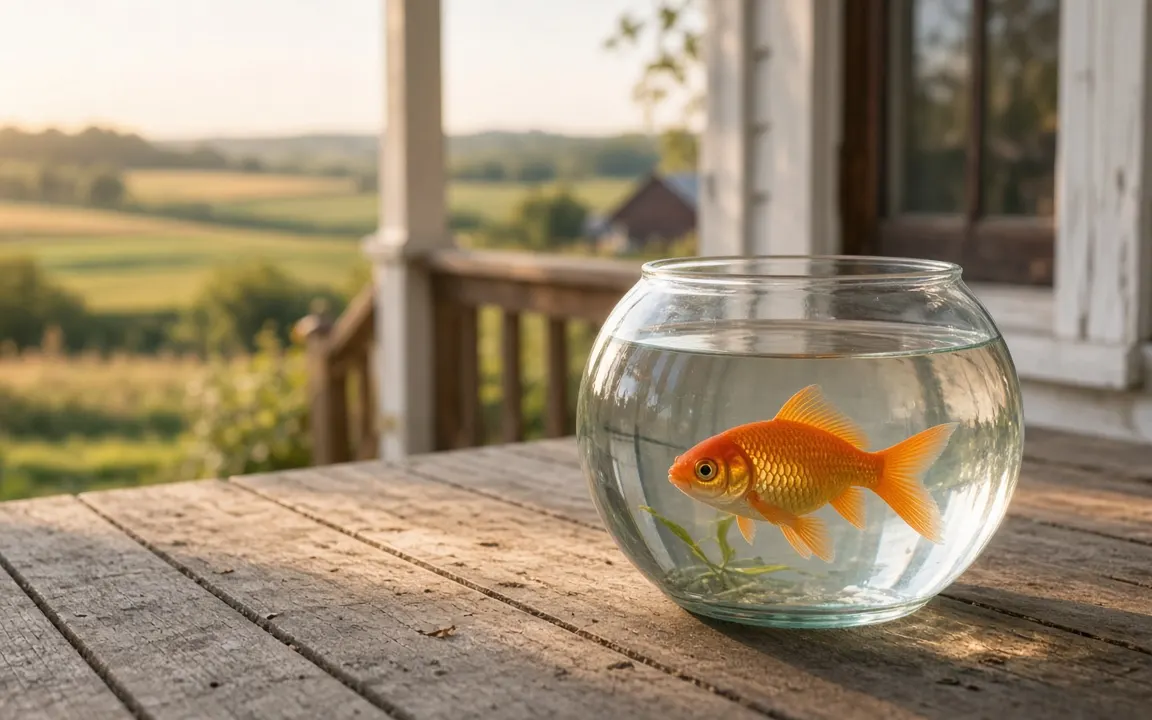
Prior Lake, Minnesota
Koi, goldfish and tank fish: the Prior Lake picture
Prior Lake is a Scott County city built around Upper and Lower Prior Lake, about 19 miles southwest of Minneapolis. Lake homes ring the shoreline, while newer subdivisions and townhouse developments fill the land between County Road 42 and Highway 13. Aftercare services covering Scott County and the southwest metro typically include Prior Lake, and since several operate within a short drive, comparing two written quotes rarely takes long.
January here averages lows around 9F, and both lakes lie frozen for much of the winter. On a frigid night a garage keeps the body of a small animal properly chilled until morning, sealed inside a lidded tote. July highs near 83F bring humid lake-country heat, so in summer head straight for the basement with a thick towel and a few ice packs sleeved in cloth, then phone for collection before noon.
For a child in Prior Lake, a goldfish won at a county fair or a betta from the pet aisle is often their first pet. When it dies, a small ceremony in the garden with a painted stone can mean more than any cremation. If your child wants to keep something, some crematories return a token vial and certificate even for a very small fish, but ask what's inside before you pay for it.
With roughly 28,140 residents, Prior Lake is the 37th-largest of the 67 Minnesota communities we cover. The nearest larger centre is Minneapolis, about 19 miles (31 km) away, which is where some providers serving Prior Lake are based.
For a second opinion on price, Shakopee (4 miles), Savage (4 miles) and Burnsville (8 miles, a larger centre) are close enough that their providers cover Prior Lake routinely. Two written quotes tell you more than any price list.
68.5%[1]
The NFDA projected Minnesota's cremation rate at 68.5% for 2024.
10 million[2]
About 10 million US households keep freshwater fish.
13%[3]
13% of UK households keep an indoor fish tank.
3-5% of body weight[4]
Embrace notes cremated remains typically weigh about 3-5% of the pet's original body weight.
Sources for the statistics above: American Pet Products Association (APPA) 2025 National Pet Owners Survey release and Embrace Pet Insurance.
Local attitudes to cremation
Cremation now covers some 68.5%[1] of deaths in Minnesota, and that steady rise has gone hand in hand with pets being treated as family. Fish are part of the shift. Koi typically live 30-40 years[5], according to the Japan Nishikigoi Promotion Association, so a pond fish can outlast a mortgage and watch children grow up. Choosing a proper cremation for a fish like that is no stranger than doing it for a dog.
The Minnesota percentage above is from NFDA 2024 Cremation & Burial Report state projections (via Occasional Sage) (2024) and refers to human funerals. Treat it as context for Prior Lake, not as a count of pets.
What the seasons mean for fish in Prior Lake
Prior Lake winters are cold, with average lows at or below freezing in January, February, March, November and December. Pond fish slow right down in winter and live under the ice, but they still need a small opening for gases to escape. Many keepers use a floating de-icer or keep an air pump running near the surface. Losses under the ice, sometimes called winterkill, are usually only discovered when the pond thaws.
Cold water hides problems in Prior Lake. Fish in an iced-over pond barely eat and their immune systems slow right down, so an infection picked up in autumn may only show itself in spring. If fish die as the water warms after January, February, March, November and December, a vet who treats fish can learn far more from a fresh, chilled body than a frozen one. Decide before you bag the fish: fridge if you want answers, freezer if you just need time.
Why a small fish still has a minimum price
Expect to pay the provider's small-pet minimum for your fish in Prior Lake. PetMD says US communal cremation starts from about $50[6], and Embrace Pet Insurance gives wider national ranges for private cremation and aquamation, shown below. Before you pay for a private cremation, ask how much ash the provider expects to return. Cremated remains usually weigh about 3-5% of body weight[4], and a fish can come in at the low end of that.
We keep the detailed Minnesota price table on one page so it stays current: see Minnesota prices.

Free tool
Cremation cost calculator
Estimate a realistic price range for your pet's size, location and the type of cremation.
Before you bury, scatter or rehome in Minnesota
A fish is small, but the rules around water are not. Keep any burial well away from ponds, streams and wells, and don't flush a fish, dead or alive. Invasive fish released by owners are a real problem in many regions. For burial and scattering, the rules for Minnesota are summarised below, and your city or council may add its own.
Not sure which office covers Prior Lake? The Minnesota local government directory is the official list.
We keep Minnesota's burial and scattering rules in one place: the Minnesota rules summary. Before a home burial in Prior Lake, also ask the city whether local ordinances add anything.
Step by step, from tank to goodbye
- Net your fish out gently and rest it on a soft cloth while you think.
- Freeze it the same day, sealed and wrapped. A frozen fish keeps for weeks, so the clock stops here.
- Work out its size: measure from nose to the fork of the tail and note the rough weight. Providers will ask.
- Tell the family, children included, plainly and truthfully. Slipping in a lookalike rarely ends well.
- Compare two options, such as private cremation with the ashes in a small urn against burying your fish beneath something newly planted.
- Book your choice and find out how they keep track of your fish from hand-over to the day it comes back.
Keeping your fish part of the family story
Cleary Lake Regional Park sits on the city's southern side, and the two Prior Lakes shape daily life here, from summer boating to winter ice fishing. Lakes and county parks aren't open for scattering without permission. Plenty of shoreline families instead choose a quiet corner of their own yard, setting a biodegradable urn under a shade tree where a pet used to watch the water.
or see how other readers answered in our polls, the planning tools turn your pet's details into figures, See what each option includes on our services page, the guides answer the longer questions and the blog the newer ones. You can also browse every city in the United States. Nearby, we also cover Rochester, Saint Paul, Duluth and Minneapolis, and every city in Minnesota.

Reader polls
What would you choose?
Vote anonymously and see how other readers answered. The results are live counts from people who visit this site, so they show real opinions, not a scientific sample.
How long had you kept the fish you lost, or your oldest fish now?
Tap an answer to vote and see how others answered. Anonymous.
Was a fish your child's first pet?
Tap an answer to vote and see how others answered. Anonymous.
If you had to decide today, which aftercare would you choose for your pet?
Tap an answer to vote and see how others answered. Anonymous.

Free tools to help you plan
Cremation cost calculator
Estimate a realistic price range for your pet's size, location and the type of cremation.

Ashes weight estimator
See roughly how much ash to expect back, by species and body weight.

Aftercare options compared
Compare private, communal and water cremation with burial on cost, timing and what comes home.
Questions people ask
How does Prior Lake's weather affect fish aftercare?
July is the hottest month in Prior Lake, with average highs around 83°F, so prompt collection matters most then. Average lows drop below freezing in January, February, March, November and December, which can make digging a grave hard until spring.
Can a provider from a neighbouring town collect from Prior Lake?
Usually yes. Shakopee is about 4 miles away, Savage is about 4 miles away and Burnsville is about 8 miles away, all inside a normal collection radius. Get the mileage written into the quote so there is no surprise on the day.
Is cremation common in Minnesota?
For people, yes: about 68.5%[1] of Minnesota deaths end in cremation, according to NFDA 2024 Cremation & Burial Report state projections (via Occasional Sage) (2024). Nobody publishes the same figure for pets, but in our experience pet choices in Prior Lake follow the human pattern closely, so cremation is the default most families here start from.
Where are the providers that serve Prior Lake actually based?
Some are local, and some run from Minneapolis, about 19 miles away. That is normal for a town this size. What matters is the collection time they quote for Prior Lake and whether the drive is priced into the total, so ask both up front.
Can my vet in Prior Lake arrange a fish's cremation?
Often yes. Many small-town vets send small animals to a regional crematory and can include a fish with their regular collection. Ask whether their crematory accepts fish, whether you'll get ashes back for your fish's size and what the total cost will be.
Is a fish really a pet worth cremating?
If it mattered to you, yes. Koi can live 30 to 40 years and many families have kept the same fish for decades. A goldfish can live 6 to 7 years. The time you spent feeding, watching and caring for a fish is real, and so is the grief. Choose the goodbye that fits the fish and your family.


Sources and our estimates
- [1] The NFDA projected Minnesota's cremation rate at 68.5% for 2024. NFDA 2024 Cremation & Burial Report state projections (via Occasional Sage), 2024.
- [2] About 10 million US households keep freshwater fish. American Pet Products Association (APPA) 2025 National Pet Owners Survey release, 2025.
- [3] 13% of UK households keep an indoor fish tank. UK Pet Food (formerly PFMA) Pet Population 2026, 2026.
- [4] Embrace notes cremated remains typically weigh about 3-5% of the pet's original body weight. Embrace Pet Insurance - Bury or Cremate Your Dog? Costs, Pros & Cons, 2025.
- [5] Nishikigoi (koi) typically live about 30 to 40 years depending on their environment. All Japan Nishikigoi Promotion Association - Ancient koi 'Hanako', 2024.
- [6] PetMD says US group (communal) cremation costs from about $50 and private cremation from about $100. PetMD - Pet Euthanasia: How Much Does It Cost? (July 2025), 2025.
- [7] A koi (30-40 years) can be expected to live about 5.4 times as long as a typical goldfish (6-7 years). Our estimate: 35 / 6.5 (range midpoints). How we calculate.
Get koi and fish aftercare options by email
Tell us what you need and where you are. We'll reply by email with clear options and prices so you can decide in your own time.