When a fish you love dies in Mankato
A pond koi and a tank tetra need very different goodbyes. Here's who in and around Mankato will cremate a fish, what it costs and what to do when there'll be almost no ash.
- Koi, goldfish and tropical fish
- Written prices, no pressure
- Burial and keepsake ideas included
Mankato, Minnesota
Who will cremate a fish in Mankato?
Mankato sits where the Blue Earth River meets the Minnesota River, about 66 miles southwest of Minneapolis, with North Mankato across the water on the bluffs. It's the regional center for south-central Minnesota, and aftercare providers based here or nearby are the practical first call. You'll find older homes around downtown, student rentals clustered by the university, and newer subdivisions on the hilltops.
Sibley Park near the river, the Red Jacket Trail and Minneopa State Park, with its waterfall and bison herd, are places many Mankato residents know well. The state park and the city each have a say over ashes on their land, so check before scattering in either. A garden bed at home, or a quiet corner of land owned by family, is a private alternative that needs no permission.
In a smaller place like Mankato, fish aftercare usually goes through the local vet, who sends small animals to a crematory in a larger city such as Minneapolis. Some vets have a weekly collection, so your fish may wait a few days in their freezer. That's fine: a fish frozen promptly keeps well. Ask the vet whether their crematory accepts fish and what, if anything, comes back for a fish of your size.
About 46,529 people live in Mankato, which makes it the 23rd-largest of the 67 Minnesota communities we cover. Some of the providers who serve Mankato are based about 66 miles away in Minneapolis, the nearest larger centre, so collection times reflect that drive.
Our pages for Faribault (36 miles), Owatonna (37 miles) and Northfield (44 miles) describe the same choices from those towns' point of view, and the providers overlap, so a quote from one often covers Mankato as well.
68.5%[1]
The NFDA projected Minnesota's cremation rate at 68.5% for 2024.
10 million[2]
About 10 million US households keep freshwater fish.
13%[3]
13% of UK households keep an indoor fish tank.
3-5% of body weight[4]
Embrace notes cremated remains typically weigh about 3-5% of the pet's original body weight.
Where these figures come from: UK Pet Food (formerly PFMA) Pet Population 2026 and Embrace Pet Insurance.
Local attitudes to cremation
Cremation is now the majority choice for people in Minnesota, at about 68.5%[1], but burial traditions still run deep. You'll see both among fish keepers. A small garden grave with a stone is a perfectly good goodbye for a tank fish, and many families choose it. Cremation tends to come up for larger pond fish, or when you rent, have no garden or expect to move house.
For the Minnesota figure we rely on NFDA 2024 Cremation & Burial Report state projections (via Occasional Sage) (2024). Read it as a picture of local custom around death and remembrance in Mankato rather than as pet data.
What the seasons mean for fish in Mankato
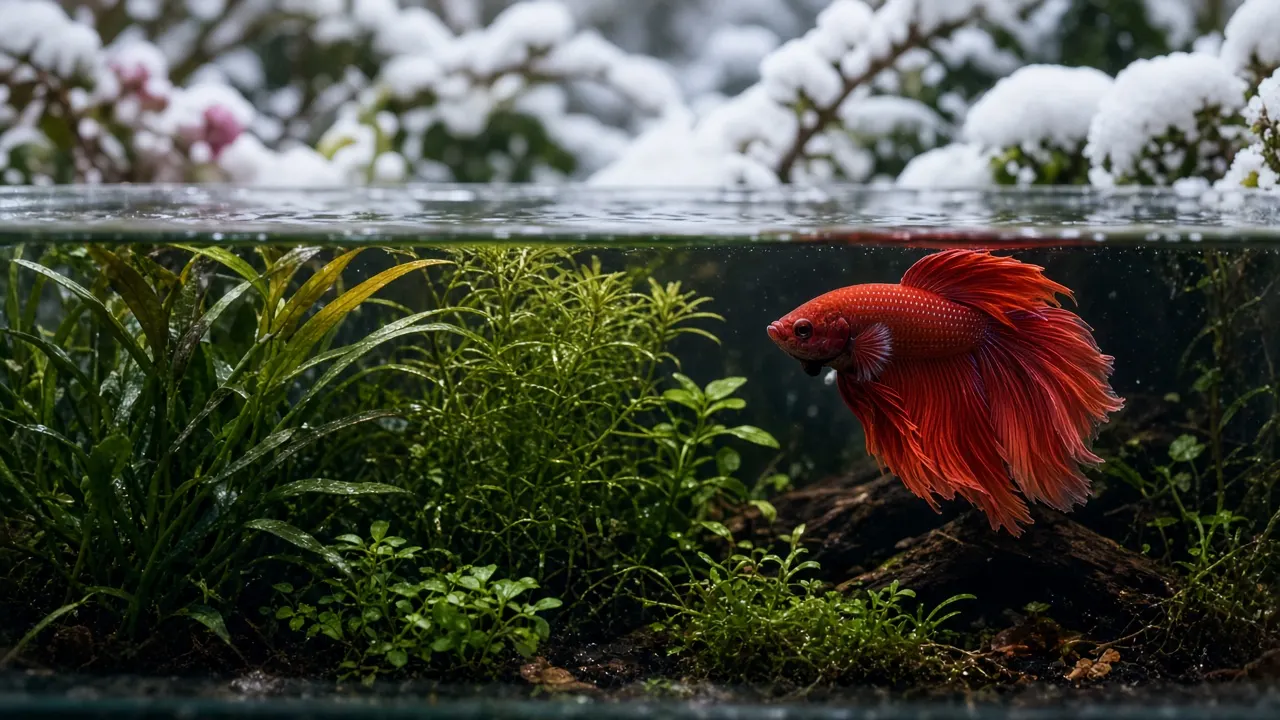
Mankato winters are cold, with average lows at or below freezing in January, February, March, November and December. Pond fish slow right down in winter and live under the ice, but they still need a small opening for gases to escape. Many keepers use a floating de-icer or keep an air pump running near the surface. Losses under the ice, sometimes called winterkill, are usually only discovered when the pond thaws.
If you find a fish frozen into the ice in Mankato, don't hammer the surface to get it out; many keepers avoid that because the shock can stress the fish still living below. Pour hot water on a spot or let a de-icer open a hole, and lift the fish out once it's free. If a fish is stuck deep in thick ice, it may be kinder to the others to wait for a thaw.
Paying for a fish's goodbye in Mankato
Many Mankato families arrange a fish's cremation through their vet, which is convenient but not always the cheapest route. In a US survey, 48.8%[5] of pet owners named their veterinary team as their main source of advice on pet death. You can also call a crematory directly and compare. For a fish, the difference between two quotes is often a collection fee you don't need.
For a line-by-line price table, see the Minnesota overview; for what's included in each option, see our services.

Free tool
Cremation cost calculator
Estimate a realistic price range for your pet's size, location and the type of cremation.
Before you bury, scatter or rehome in Minnesota
A loss sometimes leads families to give up fish keeping altogether. If you're rehoming the fish that are left, offer them to a fish store, a club or another keeper; don't be tempted to free them in a local stream or lake, however healthy the water looks. Escaped pet fish spread parasites and compete with native species. For the fish you've lost, the local rules in Minnesota are below.
The official Minnesota local government directory lists every county and city office, which is the quickest way to find who to ask in Mankato.
Home burial and scattering are governed at the Minnesota level first; our Minnesota rules summary has the detail. Then check whether Mankato or your HOA adds anything.
From the first minute to the last goodbye
- Make sure. Watch the gills and fins for a full minute. A fish lying still on the bottom can be chilled, stunned or very weak rather than gone.
- Lift your fish out with a net as soon as you're sure, so decay doesn't foul the water for the others.
- Seal it in a bag or tub, press the air out and freeze it. Chill it in the fridge instead if you want a vet to find out why it died.
- Test the water the same day for ammonia, nitrite, pH and temperature, and watch the remaining fish closely.
- Decide by size. Private cremation makes sense for a koi or big goldfish; a small tank fish is usually better buried, potted under a plant or cremated communally.
- Call a provider and ask what they'd return once they know how long and heavy it is, then have the total put in writing.
Memorials that suit a fish
Mankato has a big student population at Minnesota State University, and many students keep small pets in rentals: hamsters, rats, guinea pigs, reptiles and fish. If one dies, place the body in a small box or sealed bag in the coolest spot, or in the refrigerator for a short time. January lows near 5F make winter easier, but act quickly in summer.
there are guides for the big decisions and articles for the details, Compare every option on our services page, the planning tools turn your pet's details into figures, or look at how readers voted in our polls. Close to Mankato we also cover Rochester, Minneapolis, Saint Paul and Bloomington; the full list for Minnesota and for the United States is a click away.

Reader polls
What would you choose?
Vote anonymously and see how other readers answered. The results are live counts from people who visit this site, so they show real opinions, not a scientific sample.
Would you keep your fish in the freezer while you decide what to do?
Tap an answer to vote and see how others answered. Anonymous.
Was a fish your child's first pet?
Tap an answer to vote and see how others answered. Anonymous.
If you had to decide today, which aftercare would you choose for your pet?
Tap an answer to vote and see how others answered. Anonymous.

Free tools to help you plan
Cremation cost calculator
Estimate a realistic price range for your pet's size, location and the type of cremation.

Ashes weight estimator
See roughly how much ash to expect back, by species and body weight.

Aftercare options compared
Compare private, communal and water cremation with burial on cost, timing and what comes home.
Questions people ask
Does the Mankato climate change what I should do first?
Only the timing. In July, with highs near 81°F, cool the body and book collection the same day. In January, February, March, November and December, when lows sit below freezing, a home burial may have to wait for a thaw, so cremation with ashes returned keeps your options open.
Can a provider from a neighbouring town collect from Mankato?
Usually yes. Faribault is about 36 miles away, Owatonna is about 37 miles away and Northfield is about 44 miles away, all inside a normal collection radius. Get the mileage written into the quote so there is no surprise on the day.
Where are the providers that serve Mankato actually based?
Some are local, and some run from Minneapolis, about 66 miles away. That is normal for a town this size. What matters is the collection time they quote for Mankato and whether the drive is priced into the total, so ask both up front.
How do Minnesota attitudes to cremation compare?
NFDA 2024 Cremation & Burial Report state projections (via Occasional Sage) (2024) puts the Minnesota human cremation rate at about 68.5%[1]. We show it on the Mankato page because pet aftercare choices tend to track it: where cremation is normal for people, communal and private pet cremation are both easy to find.
What if my fish dies while the pond is frozen in Mankato?
Often you won't know until the ice melts. If you find a fish, lift it out once it's free, rather than hammering the ice. Keep it sealed in the freezer until the ground thaws for a burial, or arrange cremation in the meantime. Test the water as spring arrives, when fish start feeding again.
Is there free support for grieving a pet in Minnesota?
Yes. Veterinary students trained by grief counselors answer the free Cornell Pet Loss Support Hotline, and Tufts University runs a free Pet Loss Support Helpline on weekday evenings. Both take calls from anywhere in the US. A long-lived koi or a child's first goldfish is a real loss, and they'll treat it as one.


Sources and our estimates
- [1] The NFDA projected Minnesota's cremation rate at 68.5% for 2024. NFDA 2024 Cremation & Burial Report state projections (via Occasional Sage), 2024.
- [2] About 10 million US households keep freshwater fish. American Pet Products Association (APPA) 2025 National Pet Owners Survey release, 2025.
- [3] 13% of UK households keep an indoor fish tank. UK Pet Food (formerly PFMA) Pet Population 2026, 2026.
- [4] Embrace notes cremated remains typically weigh about 3-5% of the pet's original body weight. Embrace Pet Insurance - Bury or Cremate Your Dog? Costs, Pros & Cons, 2025.
- [5] 48.8% of US pet owners named their veterinary team as their primary resource for recommendations on pet death and dying. Cooney, Kogan, Brooks, Ellis - Pet Owners' Expectations for Pet End-of-Life Support and After-Death Body Care, Topics in Companion Animal Medicine (2020), 2020.
- [6] A koi (30-40 years) can be expected to live about 5.4 times as long as a typical goldfish (6-7 years). Our estimate: 35 / 6.5 (range midpoints). How we calculate.
Get koi and fish aftercare options by email
Tell us what you need and where you are. We'll reply by email with clear options and prices so you can decide in your own time.