Fish & Koi Cremation in New Jersey
Whether it was a prize koi or a goldfish from the school fair, you deserve a clear answer. Here's what fish aftercare looks like in New Jersey, step by step.
- Freezer tips so nothing is rushed
- Private or communal cremation explained
- Help keeping the rest of the pond safe
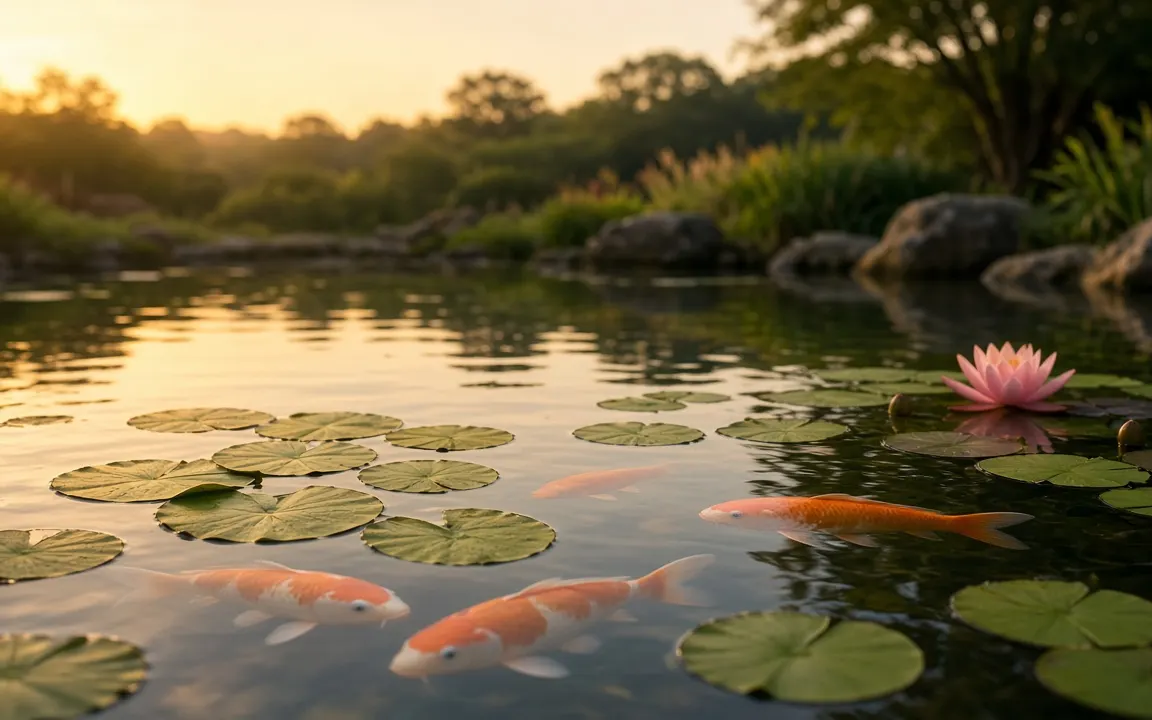
New Jersey, the United States
Fish & Koi Cremation in New Jersey: what to know
Pond keeping and aquarium keeping lead to different goodbyes across New Jersey. A tank fish usually dies indoors, is small and suits a planter, a garden grave or a shared cremation. A pond fish may be large and old, found outside after a storm or a hot night, and it's the one families most often want cremated privately. Knowing which situation you're in narrows the choice quickly.
Families across New Jersey say goodbye to fish in different ways. Some cremate a long-lived koi and keep the ashes by the pond; many bury a small tank fish in the garden or in a planter; others choose communal cremation through a vet. All of them are kinder than flushing, which can carry parasites and bacteria into local water.
We cover 58 communities in New Jersey, from Newark, Jersey City and Paterson to smaller towns. Conditions vary a lot across New Jersey: summer highs reach about 88°F in Camden, while winter lows average 21°F in Trenton. In 61% of the New Jersey communities we cover, average lows drop below freezing for three months or more, which matters for home burial.

Every New Jersey community we cover
Choose your city or town for local prices, weather and timing, and rules. 58 communities in New Jersey, largest first below.
- Newark323,808 people
- Jersey City302,013 people
- Paterson161,793 people
- Elizabeth141,675 people
- Trenton91,506 people
- Clifton91,127 people
- Bayonne74,744 people
- East Orange72,159 people
Local attitudes to cremation
Cremation accounts for about 56.5%[1] of deaths in New Jersey, so it's familiar but not the only tradition. That mix shows up in how local families say goodbye to fish. Some cremate a koi and keep the ashes by the pond; others bury a goldfish under a new plant and never think of cremation at all. Neither is more proper. Choose the goodbye that you'll feel good about in a year's time.
Source for the New Jersey figure: NFDA 2024 Cremation & Burial Report state projections (via Occasional Sage) (2024). It describes human funerals and is here as context, not as a count of pets.
What fish cremation costs in New Jersey
Four things set the total for a fish in New Jersey: private or communal cremation, whether you drop it off or need collection, what the ashes come back in and whether you want a certificate or keepsake. The fish itself rarely changes the price, because even a large koi sits in the lowest weight band. The ranges below are national; local quotes can sit above or below them.
By our estimate, private cremation costs about twice as much as communal[2] across the markets we track, and for a fish that gap deserves a moment's thought. The extra pays for your own fish's ashes to come back to you. With a koi, that buys a few ounces for a small urn. With a neon tetra, it may buy very little. Ask any New Jersey provider what they would return, then decide whether the difference is worth it. The cost calculator lays out both routes side by side.
| Service | Typical US price | Which fish it suits |
|---|---|---|
| Communal cremation, pets up to 30 lb | $45 to $75 | Any fish, when ashes aren't needed |
| Private cremation, pets up to 30 lb | $100 to $175 | Koi, pond goldfish, large tropicals |
| Water cremation (aquamation) | $80 to $450 | Any size, where offered |
| Source | CareCredit cost guide; Embrace Pet Insurance | Excludes collection, urns and keepsakes |

Free tool
Cremation cost calculator
Estimate a realistic price range for your pet's size, location and the type of cremation.
Before you bury, scatter or rehome in New Jersey
Ashes from a fish are mostly bone mineral, and scattering them is rarely regulated on your own land. Tipping them into a pond that still holds fish can cloud the water, so many keepers scatter around the edge instead. Public lakes, rivers and parks are a different matter: the body that manages them can set its own rules. Here's what applies in New Jersey.
- Burial at home: Confirm the rule for the actual parcel and proposed burial with the local authority and property owner.
- Scattering ashes: Ask the exact land manager about scattering before making arrangements; a general gathering permission is a separate matter.
- Who oversees it: the authority responsible for the specific activity and location; this guide does not identify a universal permit or licensing rule
- Worth knowing: Record the service method, release authority, identification and return instructions in writing.
A city's population does not establish which aftercare activities are allowed at an address. Check the actual site and activity before proceeding.
County and city offices set many of the local rules. To find yours, start with the official New Jersey local government directory.
A calm plan for a fish's aftercare
- If a sitter finds your fish dead while you're away, have them take it out carefully, wrap it in a paper towel and put it in the freezer in a labeled bag.
- Ask for a quick photo of the tank or pond and a note of anything unusual, such as a silent pump or cloudy water.
- Have them check the others and switch off automatic feeders if the water looks off.
- Make no aftercare decisions from a distance. Once frozen, your fish can wait for your return.
- When you're back, test the water yourself, then choose between burial and cremation calmly.
- Thank your sitter. Discovering a dead pet is hard on the person who finds it, whoever the fish belonged to.
Keeping a fish's memory close
A traditional Japanese fish print, gyotaku, can be made from a photo rather than the fish itself, and some artists will paint one of your koi from pictures. It's a striking way to remember a fish with distinctive markings. Others in New Jersey keep a scale shed in the pond or the fish's name on a small plaque.
If New Jersey is not quite where you are, all locations has the rest. Otherwise the services page, the tools and the poll results are the useful next stops.

Reader polls
What would you choose?
Vote anonymously and see how other readers answered. The results are live counts from people who visit this site, so they show real opinions, not a scientific sample.
Was a fish your child's first pet?
Tap an answer to vote and see how others answered. Anonymous.
Before reading about it, what did you think happens to a flushed fish?
Tap an answer to vote and see how others answered. Anonymous.
If you had to decide today, which aftercare would you choose for your pet?
Tap an answer to vote and see how others answered. Anonymous.

Free tools to help you plan
Cremation cost calculator
Estimate a realistic price range for your pet's size, location and the type of cremation.
Ashes weight estimator
See roughly how much ash to expect back, by species and body weight.

Aftercare options compared
Compare private, communal and water cremation with burial on cost, timing and what comes home.
Questions people ask
Who can take my remaining fish if I give up the pond in New Jersey?
Ask aquarium shops, pond societies, rehoming groups and keepers you know. Some shops take fish for store credit or simply for free. Releasing them into open water is restricted in many places, however suitable it looks, because pet fish bring diseases and unbalance native wildlife.
Can I bury a fish in my garden in New Jersey?
Usually yes, on land you own, with sensible care: wrap the fish in paper or cotton and keep well away from ponds, streams and wells. Local rules can be stricter, and landlords may object. A large planter with a new plant is a good alternative.
What's the cheapest respectful goodbye for a fish in New Jersey?
A garden or planter burial costs almost nothing and gives you a place to visit. If you'd rather not bury, ask your vet whether they include small pets in a communal cremation, usually the lowest-cost cremation available. A photo or plant memorial needs no ash at all.
Do winters in New Jersey affect fish burial?
In the colder parts of New Jersey, frozen ground can make digging impossible for months. Keep your fish sealed in the freezer until spring, or arrange cremation in the meantime. In Trenton, one of the coldest places we cover, average winter lows reach about 21°F.
Is pet cremation common in New Jersey?
For people, about 56.5%[1] of deaths in New Jersey end in cremation, and pet aftercare tends to follow local habits. For fish, the choice depends more on size than on custom: larger fish are often cremated, while small tank fish are commonly buried.
Do pet crematories in New Jersey accept fish?
Many do, particularly for larger fish such as koi and pond goldfish. Some decline very small fish because there's nothing meaningful to return, or offer communal cremation or a symbolic return instead. Call ahead with your fish's length and weight and ask what they'd expect to give back.

Sources and our estimates
- [1] The NFDA projected New Jersey's cremation rate at 56.5% for 2024. NFDA 2024 Cremation & Burial Report state projections (via Occasional Sage), 2024.
- [2] The median price multiple of private (ashes returned) over communal cremation across 8 markets is about 2.0x, ranging from 1.25x (Tokyo) to 5.2x (Auckland). Our estimate: median(private_price / communal_price) same weight band: US CareCredit 51-70 lb midpoints (250/75) = 3.33x; Auckland 15-25 kg (445/85) = 5.24x; Norway 1-20 kg (3790/1190) = 3.18x; Singapore 10-20 kg (480/260) = 1.85x; Ontario 25-250 lb (549/279) = 1.97x; Tokyo 20-30 kg (38500/30800) = 1.25x; France 20 kg midpoints (200/95) = 2.11x; Germany range midpoints (270/145) = 1.86x. How we calculate.
- [3] Private cremation cost per pound falls with size in the US: roughly $9.2/lb for a 15 lb pet, $4.2/lb at 60 lb and about $4.0/lb at 100 lb. Our estimate: band midpoint price / representative weight: 0-30 lb (midpoint $137.50 / 15 lb) = $9.17/lb; 51-70 lb ($250 / 60 lb) = $4.17/lb; over 90 lb ($400 / ~100 lb) = $4.00/lb. How we calculate.
Tell us about your fish
Tell us what you need and where you are. We'll reply by email with clear options and prices so you can decide in your own time.