Fish aftercare in Georgetown, from koi to betta
Whether it was a prize koi or a goldfish from the school fair, you deserve a clear answer. Here's what fish aftercare looks like in Georgetown, step by step.
- Koi, goldfish and tropical fish
- Written prices, no pressure
- Burial and keepsake ideas included
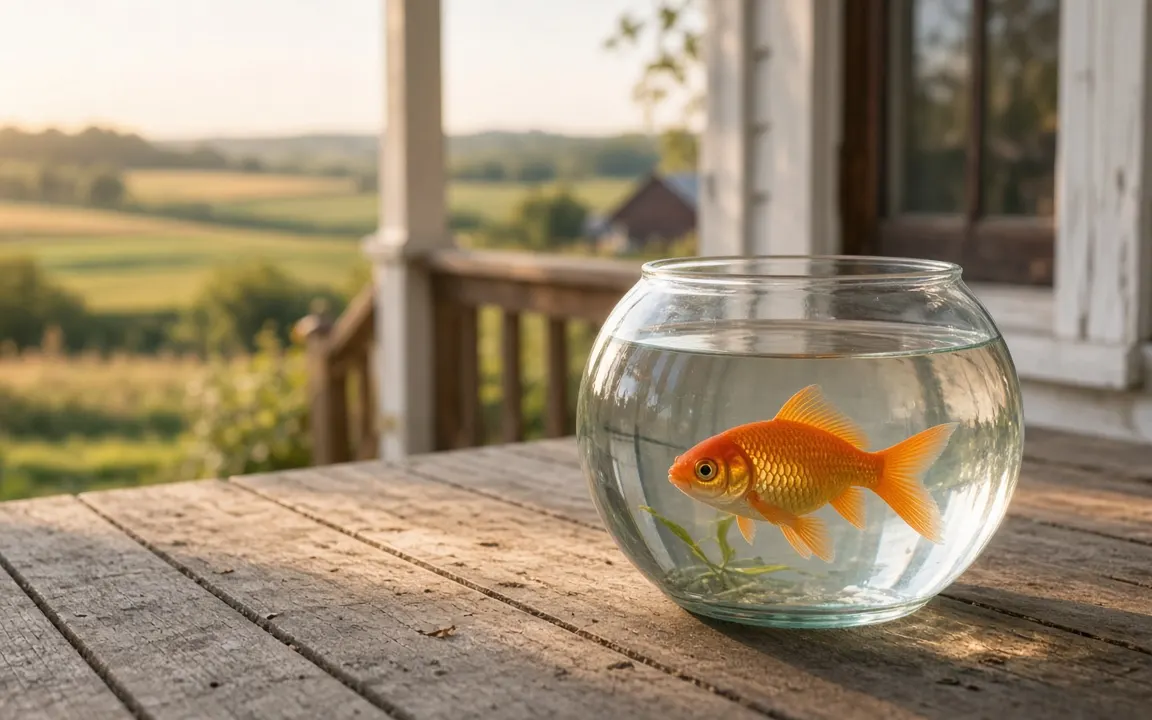
Georgetown, Kentucky
Who to call first in Georgetown when a fish dies
Royal Spring, where the town began, still bubbles up near downtown, and Elkhorn Creek winds through the countryside around it, past stone fences and pastures that many local pets know from weekend outings. Summer highs sit in the upper 80s with heavy humidity, and winters are gentler than in the northern states, with most freezing nights between December and February. Warm spells call for quick cooling on tile or concrete with ice wrapped in cloth.
Georgetown is the Scott County seat, about 16 miles north of Lexington along I-75, and one of the faster-growing towns in Kentucky since a large Toyota plant opened here in the 1980s. Housing runs from historic homes near the courthouse square and Georgetown College to wide subdivisions of newer houses on the edges. Lexington-area cremation services generally reach Georgetown, so confirm pickup timing and whether the drive adds a fee.
Home burial is common in and around Georgetown, especially where families have land. For a fish, it's quick and meaningful: plant a water iris, a hosta or a small shrub on top so the spot becomes part of the garden. The one thing to avoid is burying a fish that died of disease close to a pond or stream, where rain can carry anything left in the soil back into the water.
With roughly 40,883 residents, Georgetown is the 6th-largest of the 26 Kentucky communities we cover. Some of the providers who serve Georgetown are based about 16 miles away in Lexington, the nearest larger centre, so collection times reflect that drive.
Nearby, we also have local pages for Lexington (15 miles, a larger centre), Frankfort (19 miles) and Nicholasville (26 miles), which can help if your vet or the provider you prefer is based there.
44.0%[1]
The NFDA projected Kentucky's cremation rate at 44.0% for 2024.
10 million[2]
About 10 million US households keep freshwater fish.
13%[3]
13% of UK households keep an indoor fish tank.
3-5% of body weight[4]
Embrace notes cremated remains typically weigh about 3-5% of the pet's original body weight.
Where these figures come from: American Pet Products Association (APPA) 2025 National Pet Owners Survey release and Embrace Pet Insurance.
How Kentucky thinks about cremation
Only about 44.0%[1] of people in Kentucky are cremated, so burial remains the local tradition. For fish, that usually means a small grave in the garden, which is simple and kind for most tank fish. Cremation is still available through vets and pet crematories, though, and it becomes more attractive for a large koi you'd like to keep close, or if you rent and might move.
Source for the Kentucky number: NFDA 2024 Cremation & Burial Report state projections (via Occasional Sage) (2024). Nobody publishes a pet cremation rate for Georgetown, so the human figure is the best local signal available.
Timing a fish's aftercare in Georgetown's climate
In January, when lows in Georgetown average around 25°F, a fish that dies can wait in an unheated garage or shed inside a lidded tub, as long as it stays frozen solid. That helps if your kitchen freezer is small. Watch for mild spells, and for animals: a tub with clip-on catches keeps raccoons, foxes and the family cat out. Move it to a freezer indoors if a thaw is forecast.
Cold water hides problems in Georgetown. Fish in an iced-over pond barely eat and their immune systems slow right down, so an infection picked up in autumn may only show itself in spring. If fish die as the water warms after January, February and December, a vet who treats fish can learn far more from a fresh, chilled body than a frozen one. Decide before you bag the fish: fridge if you want answers, freezer if you just need time.
Fish cremation prices for Georgetown families
Where a Georgetown provider offers water cremation, ask for both of its versions. By our estimate, private aquamation runs about two and a half times the price of communal aquamation at the same provider[5]. The process uses roughly the water of 1–3 pet baths[6], according to the Veterinary Sustainability Alliance, which appeals to many people saying goodbye to a water animal. What comes back is a soft white powder instead of grey ash, and the national price bands appear in the table below.
For a line-by-line price table, see the Kentucky overview; for what's included in each option, see our services.

Free tool
Cremation cost calculator
Estimate a realistic price range for your pet's size, location and the type of cremation.
Burial, scattering and release rules in Kentucky
A loss sometimes leads families to give up fish keeping altogether. If you're rehoming the fish that are left, offer them to a fish store, a club or another keeper; don't be tempted to free them in a local stream or lake, however healthy the water looks. Escaped pet fish spread parasites and compete with native species. For the fish you've lost, the local rules in Kentucky are below.
The official Kentucky local government directory lists every county and city office, which is the quickest way to find who to ask in Georgetown.
Home burial and scattering are governed at the Kentucky level first; our Kentucky rules summary has the detail. Then check whether Georgetown or your HOA adds anything.
What to do when your fish dies in Georgetown
- Book an aquatic vet when an elderly or ill fish is obviously in distress. An anesthetic overdose, given gently, lets it slip away peacefully.
- Settle the aftercare question when you book, so there's no confusion about whether your fish goes on to a crematory from the vet or comes home with you.
- Carry it in a tub of water from its own tank or pond, lid on, with a battery air pump for a long drive.
- Decide whether you want to stay. Being present feels right to many people, but saying your goodbye at home beforehand is just as valid.
- Choose private cremation, communal cremation or a home burial and ask for the total in writing before you leave.
- Watch the remaining fish over the next week, especially if the one you lost had an infection.
Remembering your fish in Georgetown
Many Georgetown families moved here for work in the past few decades and have no family farm nearby to bury an animal, so cremation has become a common choice even though Kentucky overall still favors burial for people. Ashes often stay in the house, on a shelf near the pet's old bed, or wait for a planting day in the backyard garden.
Every option Georgetown families choose between is on the services page, the planning tools turn your pet's details into figures, or see what other families chose in the poll results, the guides answer the longer questions and the blog the newer ones. More local pages: Lexington, Louisville, Bowling Green and Richmond, the Kentucky overview and every city in the United States.

Reader polls
What would you choose?
Vote anonymously and see how other readers answered. The results are live counts from people who visit this site, so they show real opinions, not a scientific sample.
How long had you kept the fish you lost, or your oldest fish now?
Tap an answer to vote and see how others answered. Anonymous.
Was a fish your child's first pet?
Tap an answer to vote and see how others answered. Anonymous.
If you had to decide today, which aftercare would you choose for your pet?
Tap an answer to vote and see how others answered. Anonymous.

Free tools to help you plan
Cremation cost calculator
Estimate a realistic price range for your pet's size, location and the type of cremation.

Ashes weight estimator
See roughly how much ash to expect back, by species and body weight.

Aftercare options compared
Compare private, communal and water cremation with burial on cost, timing and what comes home.
Questions people ask
Where are the providers that serve Georgetown actually based?
Some are local, and some run from Lexington, about 16 miles away. That is normal for a town this size. What matters is the collection time they quote for Georgetown and whether the drive is priced into the total, so ask both up front.
Which nearby towns can I compare with Georgetown?
The closest communities we cover are Lexington (about 15 miles), Frankfort (about 19 miles) and Nicholasville (about 26 miles). Providers based in those places often serve Georgetown too. Ask each one for a written total that includes collection, so the distance is priced in.
Does the Georgetown climate change what I should do first?
Only the timing. In July, with highs near 87°F, cool the body and book collection the same day. In January, February and December, when lows sit below freezing, a home burial may have to wait for a thaw, so cremation with ashes returned keeps your options open.
How do Kentucky attitudes to cremation compare?
NFDA 2024 Cremation & Burial Report state projections (via Occasional Sage) (2024) puts the Kentucky human cremation rate at about 44.0%[1]. We show it on the Georgetown page because pet aftercare choices tend to track it: where cremation is normal for people, communal and private pet cremation are both easy to find.
Is there free support for grieving a pet in Kentucky?
Yes. Veterinary students trained by grief counselors answer the free Cornell Pet Loss Support Hotline, and Tufts University runs a free Pet Loss Support Helpline on weekday evenings. Both take calls from anywhere in the US. A long-lived koi or a child's first goldfish is a real loss, and they'll treat it as one.
How long will it take to get my fish's ashes back in Georgetown?
Many families receive private cremation ashes in about one to two weeks. In a smaller town, where the cremation happens in a larger city such as Lexington, it may take a little longer, especially if your vet has a weekly collection. Ask for an expected return date when you book.


Sources and our estimates
- [1] The NFDA projected Kentucky's cremation rate at 44.0% for 2024. NFDA 2024 Cremation & Burial Report state projections (via Occasional Sage), 2024.
- [2] About 10 million US households keep freshwater fish. American Pet Products Association (APPA) 2025 National Pet Owners Survey release, 2025.
- [3] 13% of UK households keep an indoor fish tank. UK Pet Food (formerly PFMA) Pet Population 2026, 2026.
- [4] Embrace notes cremated remains typically weigh about 3-5% of the pet's original body weight. Embrace Pet Insurance - Bury or Cremate Your Dog? Costs, Pros & Cons, 2025.
- [5] Private pet aquamation costs about 2.5 times communal aquamation at the same provider. Our estimate: mean of tier ratios 150/50, 200/75, 250/100, 350/150, 450/225. How we calculate.
- [6] Aquamation uses about the same water per pet as 1–3 pet baths. Veterinary Sustainability Alliance — Aquamation, 2024.
- [7] The median price multiple of private (ashes returned) over communal cremation across 8 markets is about 2.0x, ranging from 1.25x (Tokyo) to 5.2x (Auckland). Our estimate: median(private_price / communal_price) same weight band: US CareCredit 51-70 lb midpoints (250/75) = 3.33x; Auckland 15-25 kg (445/85) = 5.24x; Norway 1-20 kg (3790/1190) = 3.18x; Singapore 10-20 kg (480/260) = 1.85x; Ontario 25-250 lb (549/279) = 1.97x; Tokyo 20-30 kg (38500/30800) = 1.25x; France 20 kg midpoints (200/95) = 2.11x; Germany range midpoints (270/145) = 1.86x. How we calculate.
Get koi and fish aftercare options by email
Tell us what you need and where you are. We'll reply by email with clear options and prices so you can decide in your own time.