Saying goodbye to a pet fish in Washington
Fish are real pets, and some live for decades. We explain fish cremation in Washington in plain words, including when a small fish is better honored another way.
- What to do in the first hour
- What a small-pet minimum really costs
- Options emailed for your area
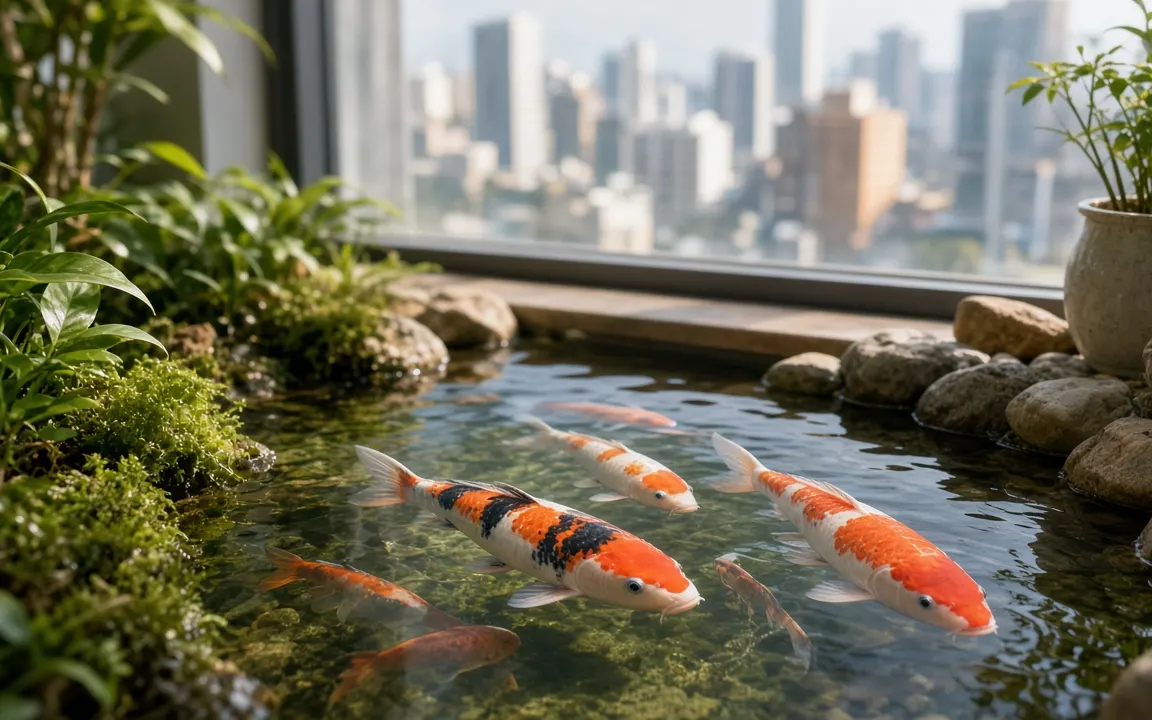
Washington, District of Columbia
Who will cremate a fish in Washington?
DC Public Works only picks up animals that have died on sidewalks, streets and alleys, and it does not enter private homes or yards. Its guidance points pet owners toward their vet or a private service, and animals are not to go in the regular trash cans. So when a pet dies in your rowhouse or apartment, the practical first step is to call your vet or a private cremation provider for collection.
DC summers are hot and heavy with humidity, and July highs around 90 degrees can make a top-floor apartment stifling. A pet who dies in that weather needs to be moved to the building's coolest spot, a basement or tiled bathroom, wrapped and packed with ice, with collection booked for the same day. Winters are milder, though a few snowstorms each year can snarl traffic across the Beltway and slow any pickup.
Getting a fish to a provider in a busy city takes a little planning. A frozen koi is heavy and awkward, so put the bag inside a small cooler with ice packs, and take a car or cab rather than public transport. If you're dropping a small tank fish at a vet, a lidded tub inside a paper bag is enough. Call ahead so someone at the front desk expects you and you don't have to explain at the counter.
About 693,645 people live in Washington.
The closest communities we cover are Arlington (4 miles), Hyattsville (6 miles) and Silver Spring (6 miles). Providers serving those towns often travel to Washington too, so it can be worth asking them for a quote.
56.9%[1]
The NFDA projected District of Columbia's cremation rate at 56.9% for 2024.
10 million[2]
About 10 million US households keep freshwater fish.
13%[3]
13% of UK households keep an indoor fish tank.
3-5% of body weight[4]
Embrace notes cremated remains typically weigh about 3-5% of the pet's original body weight.
None of the figures on this this page are ours alone: they rest on UK Pet Food (formerly PFMA) Pet Population 2026 and American Pet Products Association (APPA) 2025 National Pet Owners Survey release.

Cremation in District of Columbia: a little context
Roughly 56.9%[1] of funerals in District of Columbia end in cremation, so plenty of families mix both traditions, and couples sometimes disagree over a fish. One wants a grave by the pond; the other wants something to keep. A compromise works well: cremate the fish, keep a little of the ashes indoors and bury the rest beside a marginal plant near the water. Ashes carry no disease, so the pond stays safe, and you get both a keepsake and a place to visit.
The District of Columbia figure comes from NFDA 2024 Cremation & Burial Report state projections (via Occasional Sage) (2024). It describes people, not pets, so read it as a sign of local attitudes rather than a pet statistic.
Timing a fish's aftercare in Washington's climate
In Washington's long warm season, fish keep eating and growing for most of the year, which is good for them but means pond water needs close watching. If a fish dies without an obvious cause in the hotter months, take a water sample to a fish store or test it yourself the same day. Knowing whether oxygen, ammonia or temperature was to blame can save the others.
Washington summers are hot, with July averaging highs around 90°F. Warm water holds less dissolved oxygen than cold water, so pond fish are most at risk on hot, still nights, and losses are often found at dawn when oxygen is lowest. If you find a fish gasping at the surface, get an air pump or fountain running before anything else. Then lift out any fish that have died and put them straight in the freezer.
Fish cremation quotes in Washington: what's normal
Expect to pay the provider's small-pet minimum for your fish in Washington. PetMD says US communal cremation starts from about $50[5], and Embrace Pet Insurance gives wider national ranges for private cremation and aquamation, shown below. Before you pay for a private cremation, ask how much ash the provider expects to return. Cremated remains usually weigh about 3-5% of body weight[4], and a fish can come in at the low end of that.
The District of Columbia price table breaks costs down by size; our services page explains what sits behind each line.

Free tool
Cremation cost calculator
Estimate a realistic price range for your pet's size, location and the type of cremation.
Rules worth knowing in District of Columbia
Rules about pets after death are set locally, and fish are usually covered by the same rules as other small pets. Garden burial is often allowed on land you own, with limits near wells and water. Scattering ashes directly into lakes and rivers may need permission. Releasing live fish into the wild is restricted in many places, and some ban releasing goldfish outright.
For what Washington itself says, see District of Columbia Department of Public Works. Its pages cover municipal collection; a private cremation is arranged separately. To find your county or city office in District of Columbia, start with the official District of Columbia local government directory.
Home burial and scattering are governed at the District of Columbia level first; our District of Columbia rules summary has the detail. Then check whether Washington or your HOA adds anything.
Step by step, from tank to goodbye
- Take a breath. Nothing has to happen in the next hour once your fish is out of the water.
- Wrap your fish in a damp paper towel or cloth, then seal and label the bag; nobody in your Washington home wants a surprise in the freezer.
- Check on the survivors: aeration, filter, heater and a water test. If more than one fish looks unwell, call a vet who sees fish.
- Ask your vet or a local fish store which crematories near Washington accept fish.
- Choose private, communal or a burial, and ask for a written total before you agree.
- Drop your fish off in a cooler with ice packs, or arrange a pickup when a large koi is too heavy to lift and carry on your own.
- Plan a small goodbye, above all when children knew the fish: a picture they draw, a painted stone or something planted there.
Keeping a fish's memory close
Many District households live in narrow rowhouses or apartment buildings with limited parking, and a lot of residents don't own a car. When you call a provider, mention stairs, elevators, parking restrictions and building rules so they can plan. The city's population turns over quickly with government, military and diplomatic postings, so ask how ashes can be shipped if you move soon.
For a plain comparison of the choices, open services, or see what other families chose in the poll results, the guides answer the longer questions and the blog the newer ones, try the free planning tools. You can also browse every city in the United States.

Reader polls
What would you choose?
Vote anonymously and see how other readers answered. The results are live counts from people who visit this site, so they show real opinions, not a scientific sample.
What would you choose for a fish you loved?
Tap an answer to vote and see how others answered. Anonymous.
Which memorial feels right for a fish?
Tap an answer to vote and see how others answered. Anonymous.
If you had to decide today, which aftercare would you choose for your pet?
Tap an answer to vote and see how others answered. Anonymous.

Free tools to help you plan
Cremation cost calculator
Estimate a realistic price range for your pet's size, location and the type of cremation.

Ashes weight estimator
See roughly how much ash to expect back, by species and body weight.

Aftercare options compared
Compare private, communal and water cremation with burial on cost, timing and what comes home.
Questions people ask
Is cremation common in District of Columbia?
For people, yes: about 56.9%[1] of District of Columbia deaths end in cremation, according to NFDA 2024 Cremation & Burial Report state projections (via Occasional Sage) (2024). Nobody publishes the same figure for pets, but in our experience pet choices in Washington follow the human pattern closely, so cremation is the default most families here start from.
How does Washington's weather affect fish aftercare?
July is the hottest month in Washington, with average highs around 90°F, so prompt collection matters most then. Average lows drop below freezing in January and February, which can make digging a grave hard until spring.
Can a provider from a neighbouring town collect from Washington?
Usually yes. Arlington is about 4 miles away, Hyattsville is about 6 miles away and Silver Spring is about 6 miles away, all inside a normal collection radius. Get the mileage written into the quote so there is no surprise on the day.
How do I explain a fish's death to my child?
Use simple, true words: the fish has died, its body stopped working and it won't come back. Avoid swapping in a lookalike. Let your child help with a small goodbye, such as choosing a stone, drawing a picture or picking a plant for the spot. A first pet's death is often a child's first loss, and handling it gently helps.
How much ash does a fish leave after cremation?
Cremated remains usually weigh about 3 to 5% of body weight, and fish tend toward the low end because they're mostly water with fine bones. A large koi might return a few ounces, enough for a small urn. A pond goldfish may leave a keepsake vial's worth. A small tank fish may leave nothing you could collect separately.
Is a fish really a pet worth cremating?
If it mattered to you, yes. Koi can live 30 to 40 years and many families have kept the same fish for decades. A goldfish can live 6 to 7 years. The time you spent feeding, watching and caring for a fish is real, and so is the grief. Choose the goodbye that fits the fish and your family.


Sources and our estimates
- [1] The NFDA projected District of Columbia's cremation rate at 56.9% for 2024. NFDA 2024 Cremation & Burial Report state projections (via Occasional Sage), 2024.
- [2] About 10 million US households keep freshwater fish. American Pet Products Association (APPA) 2025 National Pet Owners Survey release, 2025.
- [3] 13% of UK households keep an indoor fish tank. UK Pet Food (formerly PFMA) Pet Population 2026, 2026.
- [4] Embrace notes cremated remains typically weigh about 3-5% of the pet's original body weight. Embrace Pet Insurance - Bury or Cremate Your Dog? Costs, Pros & Cons, 2025.
- [5] PetMD says US group (communal) cremation costs from about $50 and private cremation from about $100. PetMD - Pet Euthanasia: How Much Does It Cost? (July 2025), 2025.
- [6] The median price multiple of private (ashes returned) over communal cremation across 8 markets is about 2.0x, ranging from 1.25x (Tokyo) to 5.2x (Auckland). Our estimate: median(private_price / communal_price) same weight band: US CareCredit 51-70 lb midpoints (250/75) = 3.33x; Auckland 15-25 kg (445/85) = 5.24x; Norway 1-20 kg (3790/1190) = 3.18x; Singapore 10-20 kg (480/260) = 1.85x; Ontario 25-250 lb (549/279) = 1.97x; Tokyo 20-30 kg (38500/30800) = 1.25x; France 20 kg midpoints (200/95) = 2.11x; Germany range midpoints (270/145) = 1.86x. How we calculate.
Get koi and fish aftercare options by email
Tell us what you need and where you are. We'll reply by email with clear options and prices so you can decide in your own time.