When a fish you love dies in Halifax
A pond koi and a tank tetra need very different goodbyes. Here's who in and around Halifax will cremate a fish, what it costs and what to do when there'll be almost no ash.
- Providers that actually accept fish
- Honest ash estimates before you pay
- Gentle options for tiny tank fish
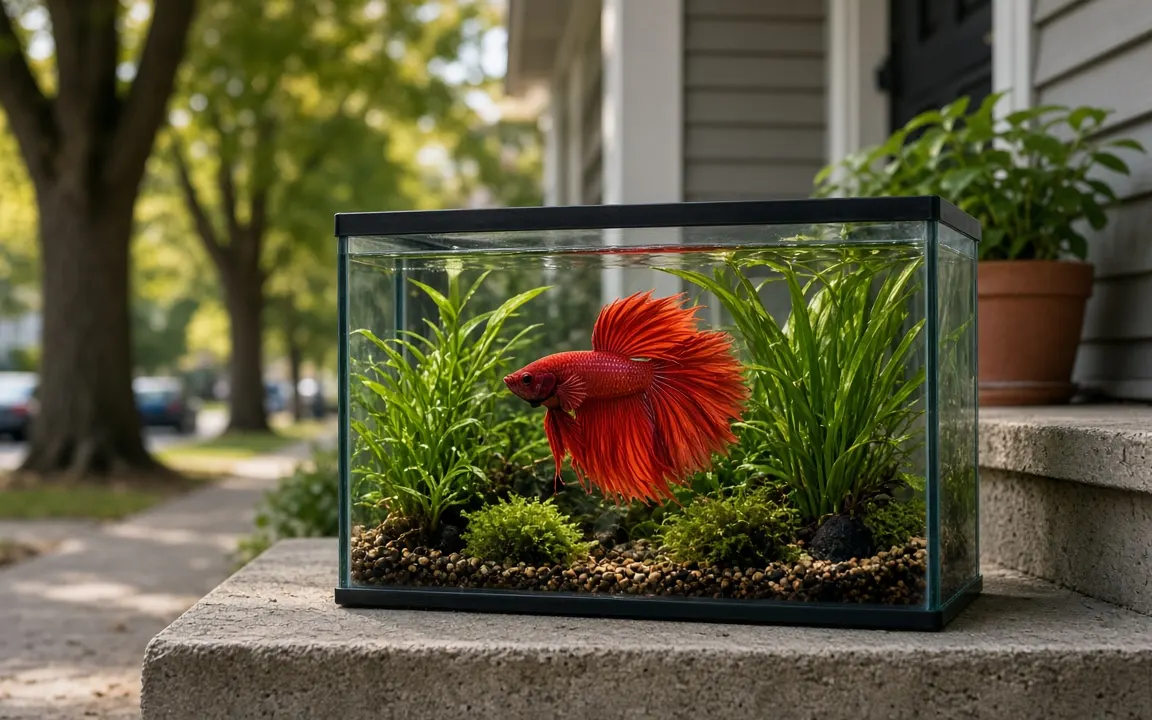
Halifax, Nova Scotia
Who will cremate a fish in Halifax?
Halifax weather is changeable, with fog off the harbour, heavy snow and ice in winter, and the occasional post-tropical storm in late summer and fall. A snowbound driveway or icy front steps can make a collection harder, so clearing a path helps. The ground also stays frozen for much of the winter, which rules out backyard burial until spring, so cremation is the usual choice then.
Halifax covers a huge area, from peninsula apartments and older wooden houses in the North End to suburban Dartmouth, Bedford and Sackville, and rural communities along the Eastern Shore. That spread matters for aftercare, because a pickup downtown and one in a coastal village an hour away are very different trips. Give your community name as well as your street address when you ask for options, and ask what travel costs apply.
Garden burial is still the most common goodbye for small fish in a city like Halifax, and it's a good one. Pick a spot well away from the pond, any vegetable beds and your neighbor's fence line, and deep enough that curious pets won't disturb it. Wrap the fish in paper or cotton, not plastic. If you rent, a large planter with a new plant works just as well and can move house with you.
Halifax is home to about 439,000 people.
81.1%[1]
CANA projects the Canadian cremation rate will reach 81.1% by 2030.
10 million[2]
About 10 million US households keep freshwater fish.
13%[3]
13% of UK households keep an indoor fish tank.
3-5% of body weight[4]
Embrace notes cremated remains typically weigh about 3-5% of the pet's original body weight.
The published sources behind those figures are American Pet Products Association (APPA) 2025 National Pet Owners Survey release and Embrace Pet Insurance.
How Canada thinks about cremation
With about 81.1%[1] of people cremated, cremation is firmly part of local life in Canada. Families who keep ashes at home for a parent often feel the same about a long-lived pet, and a koi that has been in the family for twenty years is no exception. If you want your fish home in a small urn beside the pond or on a shelf, you'll find plenty of people here who understand exactly why.
CANA Industry Statistical Information (2030) is where the Canada figure comes from. It counts people; we use it because attitudes to cremating a pet in Halifax tend to follow attitudes to cremation generally.
Season by season: fish losses in Halifax
Local weather affects fish in two ways. Heat lowers the oxygen in pond and tank water and speeds up decay, so warm-weather losses need prompt action. Cold can freeze ponds and ground alike, so a winter burial may have to wait. Your provider in Halifax will know the seasons well, so ask what they'd suggest at this time of year.

Why a small fish still has a minimum price
Some Canadian humane societies bundle euthanasia with communal cremation for cats and dogs; the Hamilton/Burlington SPCA lists CAD 225 to 275 for cats[5]. Few advertise anything for fish, but it's worth asking a local humane society or your vet whether a fish can join their shared cremation. In Halifax, that is often the lowest-cost respectful route when you don't need ashes back.
The full price table by size is on our Nova Scotia page, and the services page explains what each option includes.

Free tool
Cremation cost calculator
Estimate a realistic price range for your pet's size, location and the type of cremation.
Before you bury, scatter or rehome in Nova Scotia
You don't need a permit to have a fish cremated, but what you do with the body or the ashes can be governed by local rules. The most important one for fish keepers applies to living fish: never release a fish, or empty a pond or tank, into a creek, lake or drain. Many places restrict releasing non-native fish because they can spread disease and crowd out wildlife.
Across Canada, long winters shape fish aftercare. Garden ponds freeze over, fish overwinter under the ice and losses are often found at the spring thaw. Frozen ground means many families keep a fish in the freezer until spring. Most provinces restrict releasing non-native fish, so never empty a pond or tank into local water.
For Nova Scotia's rules on burying a pet at home or scattering ashes, see the Nova Scotia guide. Local rules in Halifax can be stricter than the state's, especially in homeowners' associations and rentals.
From the first minute to the last goodbye
- If a sitter finds your fish dead while you're away, have them take it out carefully, wrap it in a paper towel and put it in the freezer in a labeled bag.
- Ask for a quick photo of the tank or pond and a note of anything unusual, such as a silent pump or cloudy water.
- Have them check the others and, if the water doesn't look right, turn any automatic feeder off.
- Make no aftercare decisions from a distance. Once frozen, your fish can wait for your return.
- When you're back, run your own water test, and only then weigh up burial against cremation without any rush.
- Thank your sitter. Finding a dead pet is upsetting for them too, even when it's someone else's fish.
Remembering your fish in Halifax
Many Halifax pets live in older homes with narrow staircases, and plenty of people rent in multi-unit buildings on the peninsula. If you are on an upper floor, mention the stairs and where a vehicle can park. Your vet is often the easiest starting point, since most clinics here arrange cremation, but you can also request quotes directly if you want to choose a provider yourself.
the planning tools turn your pet's details into figures, read our guides and latest articles, Compare every option on our services page, or see how other readers answered in our polls. You can also browse every city in Canada.

Reader polls
What would you choose?
Vote anonymously and see how other readers answered. The results are live counts from people who visit this site, so they show real opinions, not a scientific sample.
Which memorial feels right for a fish?
Tap an answer to vote and see how others answered. Anonymous.
Before reading about it, what did you think happens to a flushed fish?
Tap an answer to vote and see how others answered. Anonymous.
If you had to decide today, which aftercare would you choose for your pet?
Tap an answer to vote and see how others answered. Anonymous.

Free tools to help you plan
Cremation cost calculator
Estimate a realistic price range for your pet's size, location and the type of cremation.

Ashes weight estimator
See roughly how much ash to expect back, by species and body weight.

Aftercare options compared
Compare private, communal and water cremation with burial on cost, timing and what comes home.
Questions people ask
Why does the Halifax page quote a human cremation rate?
Because it is the best local signal we have. CANA Industry Statistical Information (2030) reports about 81.1%[1] of Canada residents are cremated. There is no official pet equivalent, and inventing one would be worse than quoting a real, clearly labelled number.
How do I explain a fish's death to my child?
Use simple, true words: the fish has died, its body stopped working and it won't come back. Avoid swapping in a lookalike. Let your child help with a small goodbye, such as choosing a stone, drawing a picture or picking a plant for the spot. A first pet's death is often a child's first loss, and handling it gently helps.
Can I freeze my fish over a Canadian winter and bury it in spring?
Yes, and many families do. Seal the fish in a bag, press the air out, wrap it and label it. It will keep perfectly well in the freezer until the ground thaws. Some families plant a shrub or flowers over the spot in spring, which turns the burial into something to look forward to.
Is a fish really a pet worth cremating?
If it mattered to you, yes. Koi can live 30 to 40 years and many families have kept the same fish for decades. A goldfish can live 6 to 7 years. The time you spent feeding, watching and caring for a fish is real, and so is the grief. Choose the goodbye that fits the fish and your family.
Should I drop my fish off or have it collected in Halifax?
For most fish, dropping it off is simpler and cheaper. Put the sealed, frozen fish in a small cooler with ice packs and call ahead. Collection makes sense for a heavy koi you can't carry, or if you can't travel. Ask whether collection is included or charged separately.
What should I bring when I drop my fish off in Halifax?
Bring the fish still frozen, double-bagged in an insulated box, plus your name, phone number and the fish's name. Know whether you want private or communal cremation and what container you'd like the ashes in. A photo helps staff put a face to the name. Ask for a receipt that shows an identification number, so you can check it against the paperwork when the ashes come back.


Sources and our estimates
- [1] CANA projects the Canadian cremation rate will reach 81.1% by 2030. CANA Industry Statistical Information, 2030.
- [2] About 10 million US households keep freshwater fish. American Pet Products Association (APPA) 2025 National Pet Owners Survey release, 2025.
- [3] 13% of UK households keep an indoor fish tank. UK Pet Food (formerly PFMA) Pet Population 2026, 2026.
- [4] Embrace notes cremated remains typically weigh about 3-5% of the pet's original body weight. Embrace Pet Insurance - Bury or Cremate Your Dog? Costs, Pros & Cons, 2025.
- [5] The Hamilton/Burlington SPCA bundles euthanasia plus communal cremation at CAD 225-275 for cats and CAD 240-475 for dogs (plus HST). Florence (Ontario) - How Much Does Pet Euthanasia and Cremation Cost in Ontario? 2026 Guide, 2026.
- [6] The median price multiple of private (ashes returned) over communal cremation across 8 markets is about 2.0x, ranging from 1.25x (Tokyo) to 5.2x (Auckland). Our estimate: median(private_price / communal_price) same weight band: US CareCredit 51-70 lb midpoints (250/75) = 3.33x; Auckland 15-25 kg (445/85) = 5.24x; Norway 1-20 kg (3790/1190) = 3.18x; Singapore 10-20 kg (480/260) = 1.85x; Ontario 25-250 lb (549/279) = 1.97x; Tokyo 20-30 kg (38500/30800) = 1.25x; France 20 kg midpoints (200/95) = 2.11x; Germany range midpoints (270/145) = 1.86x. How we calculate.
Tell us about your fish
Tell us what you need and where you are. We'll reply by email with clear options and prices so you can decide in your own time.